Why This Fails Locally
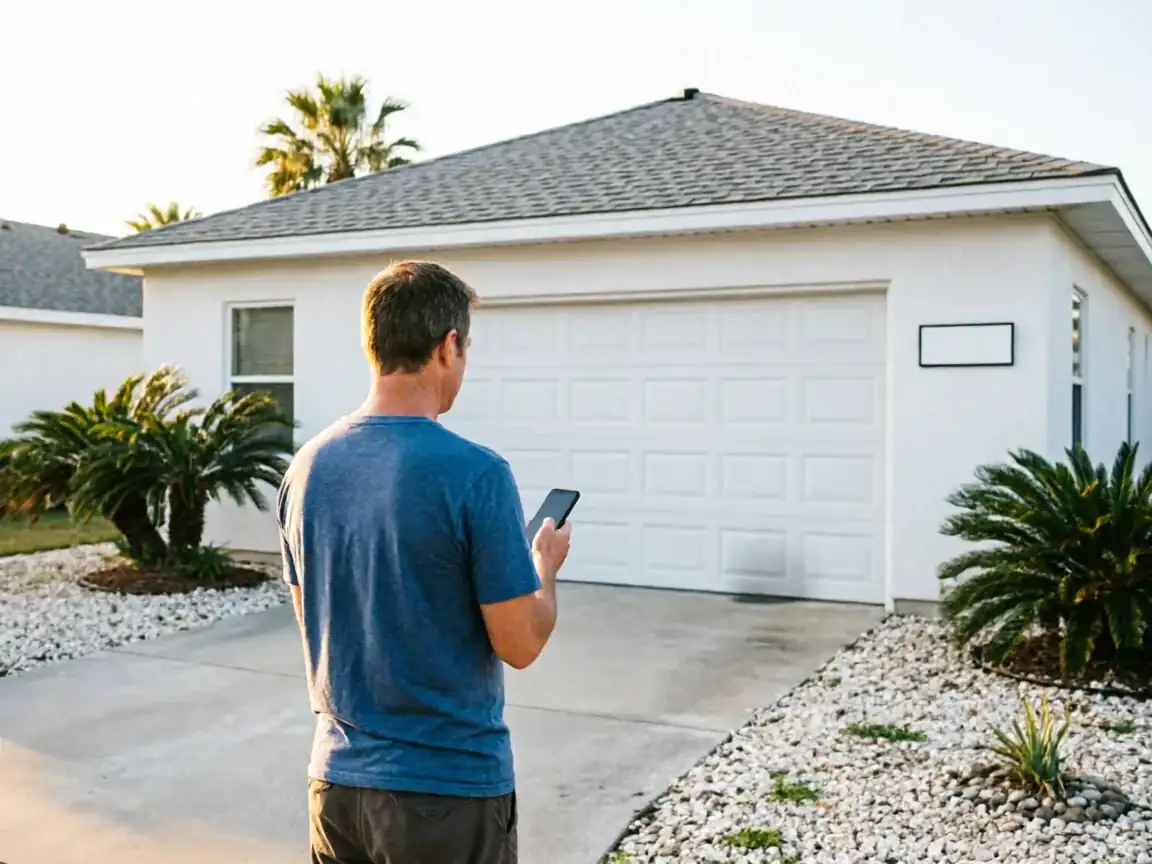
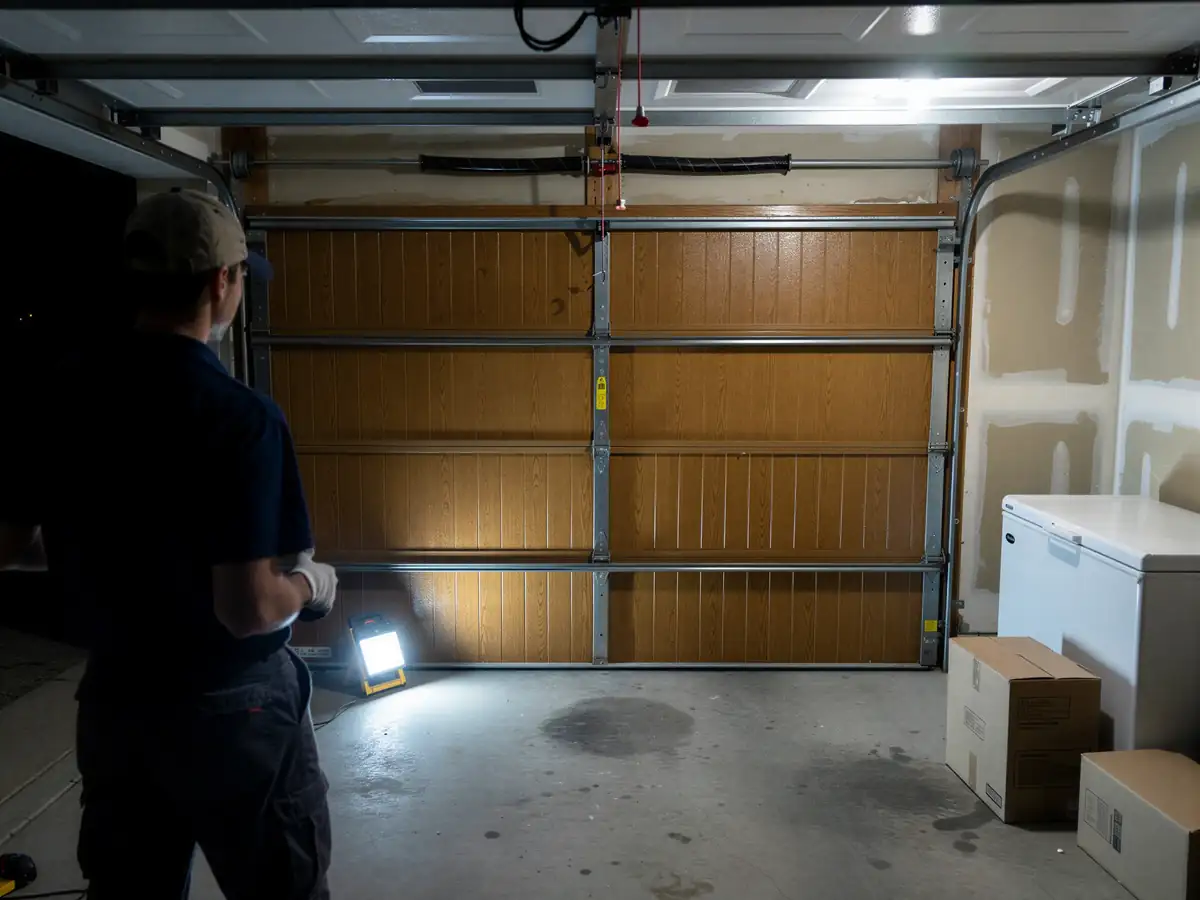
Most houses in The Hammocks went up around 1991, which puts this neighborhood a solid decade or more newer than the older sections closer to Homestead. That matters for one reason: a lot of these garage doors are still running their original torsion spring, the one installed the day the house was framed. Nobody touches a spring until it breaks, so if your house dates to the early 90s and the door has never been serviced, there's a real chance what's lifting that door right now is over thirty years old steel that's been cycling up and down twice a day since the first Bush administration.
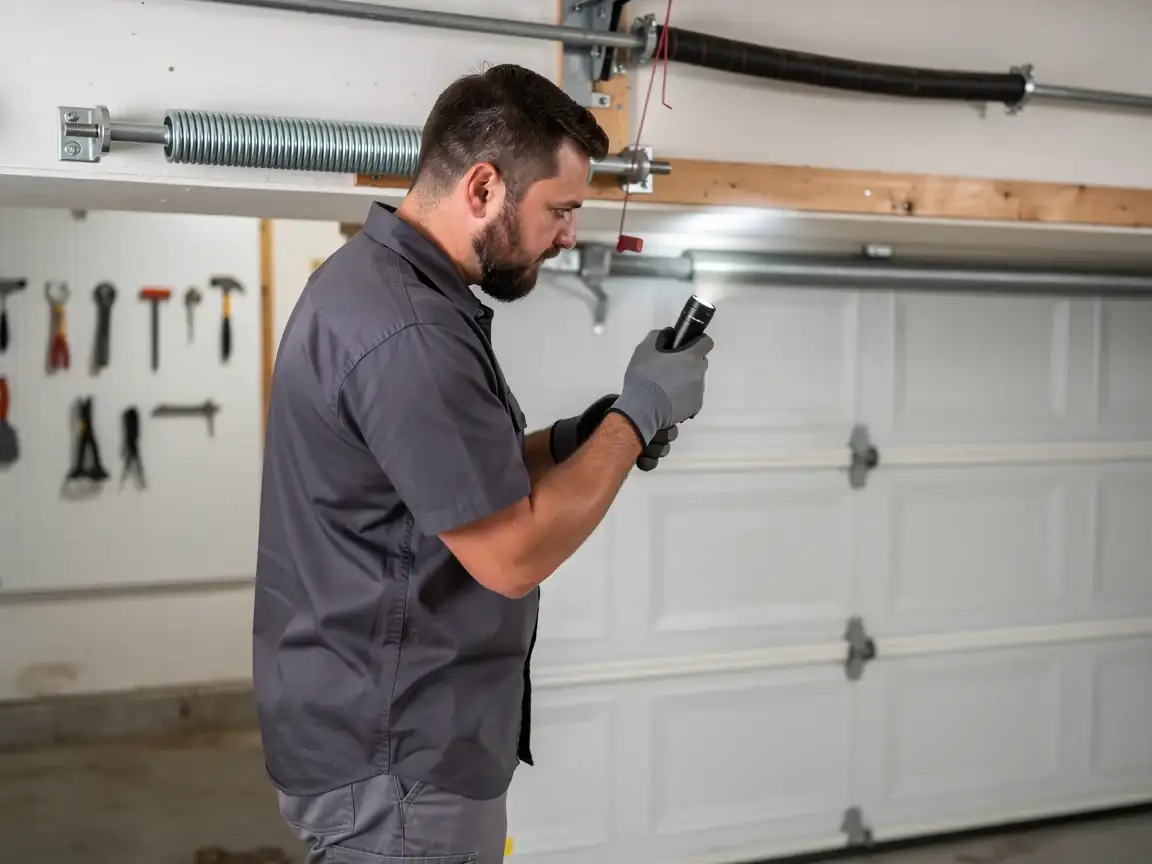
Springs don't fail gradually. They fail on a cycle count, and a spring rated for roughly 10,000 cycles doesn't care that it looks fine sitting there. What usually gives it away first is the door feeling heavier than it used to, or a visible gap opening up in one coil of the spring itself. On a 1991-era build you're also more likely to find a single spring setup rather than the dual-spring systems common on later doors, which means when it goes, the door doesn't open at all - no backup spring taking up slack.
This is a different failure pattern than you'd see on a 1970s house with decades-old hardware already replaced once or twice. Here, it's often the first failure the door has ever had.
Booking a Visit
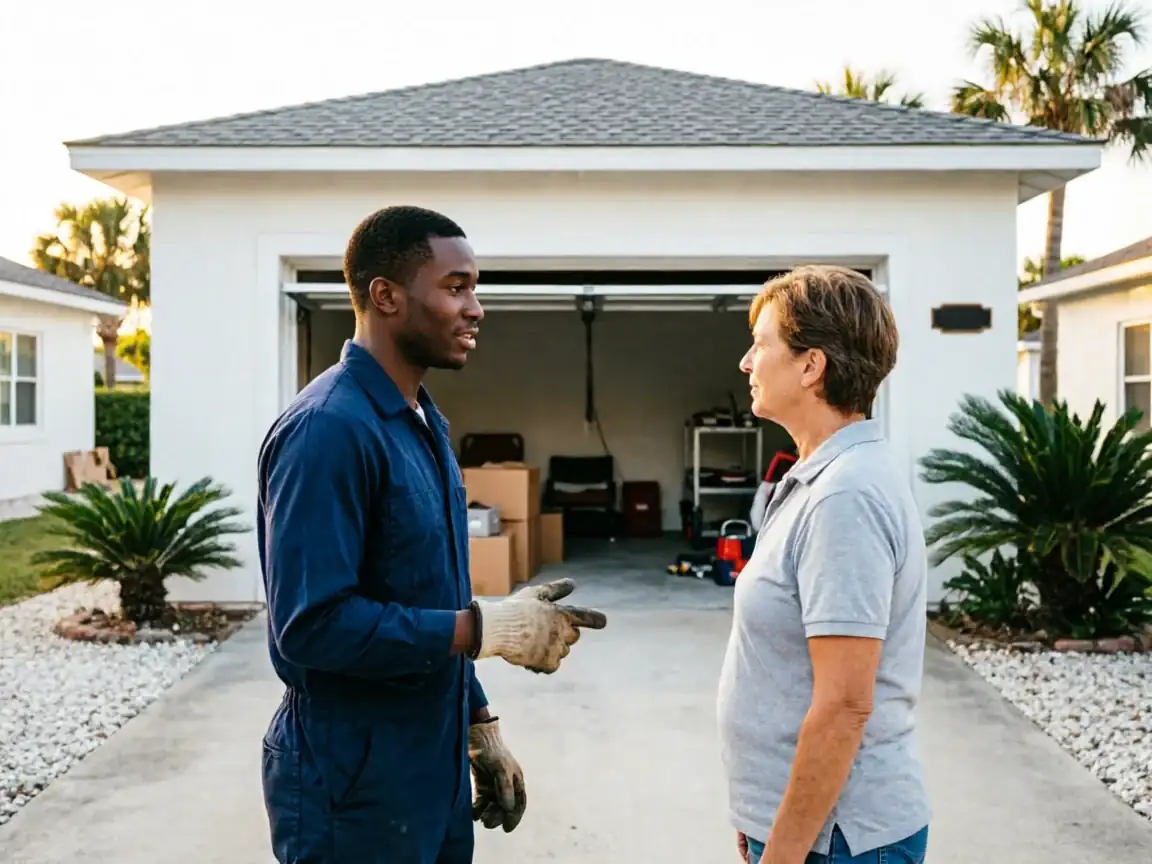
Homestead Garage Door Pros covers The Hammocks from the Homestead shop, about 14 miles out. We don't keep a branch or a drop point in the neighborhood, so when you call, you're booking a truck that drives in, not a local crew already down the street. Tell us the make of the door if you know it and whether it's one spring or two - that's the single biggest thing that changes what's on the truck when it shows up.
If you're not sure what you're looking at, a photo of the spring area above the door helps more than a description. We'd rather confirm before the drive than guess and come back twice.
See the service area page for how this fits with the rest of what we cover out of Homestead, and the main spring repair page for how the job itself is priced and scheduled.
The DIY Question
Don't
A torsion spring under tension can do real damage if it lets go while you're working on it, and the wind-up bars and clamps needed to do it safely aren't something most garages have lying around. Extension springs, the kind mounted horizontally above the tracks, are a little more forgiving but still not a casual fix - they're under enough tension to send a cable whipping if it slips.
What you can safely check yourself
Whether the door is binding on the tracks versus genuinely refusing to lift, whether one side looks lower than the other, and whether you hear a loud bang at some point (that's usually the spring itself breaking, not a bad omen for something else). Any of that is useful to tell us on the phone.
The honest limit here
If the opener motor is also struggling or the tracks are visibly bent, a spring swap alone won't fix the door, and we'll say so rather than replace a spring and send you a bill for a problem that's still there.
What You Are Seeing
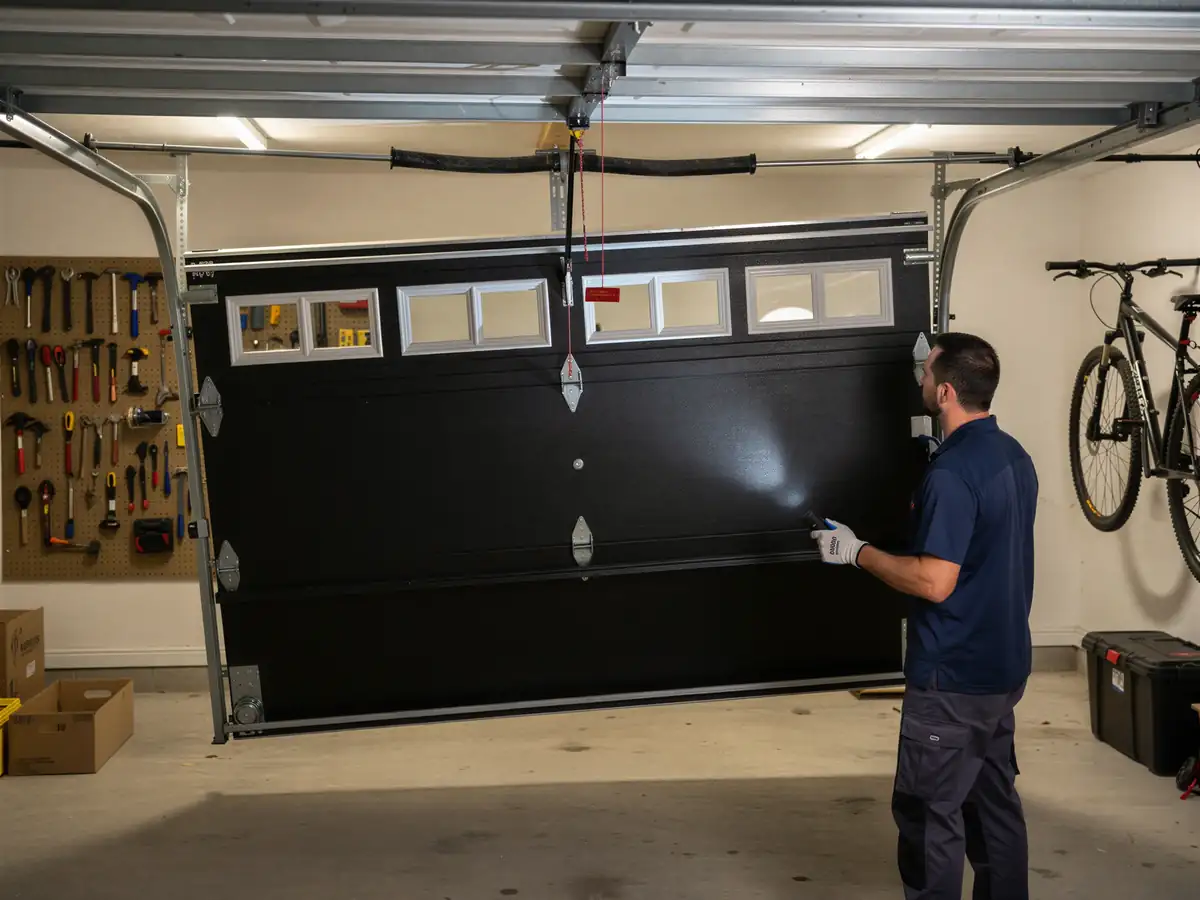
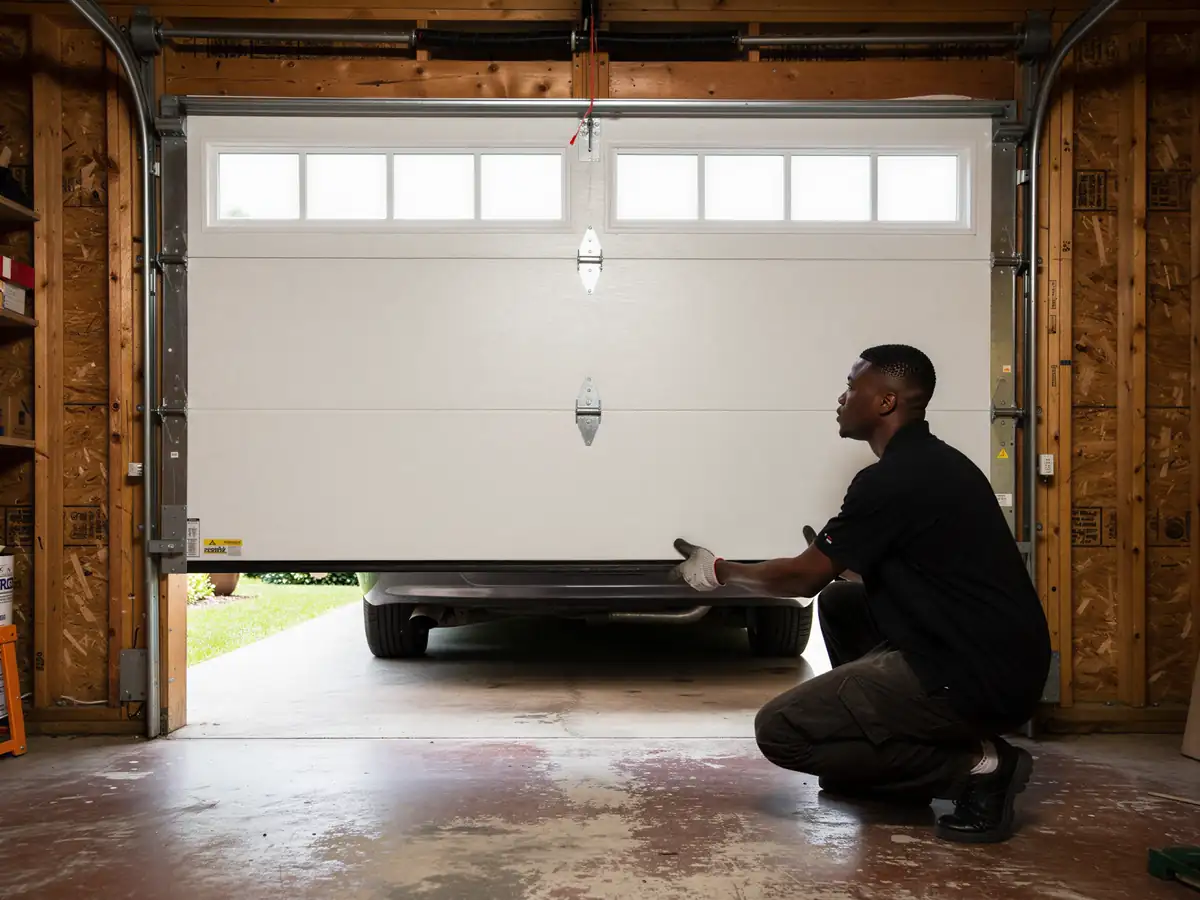
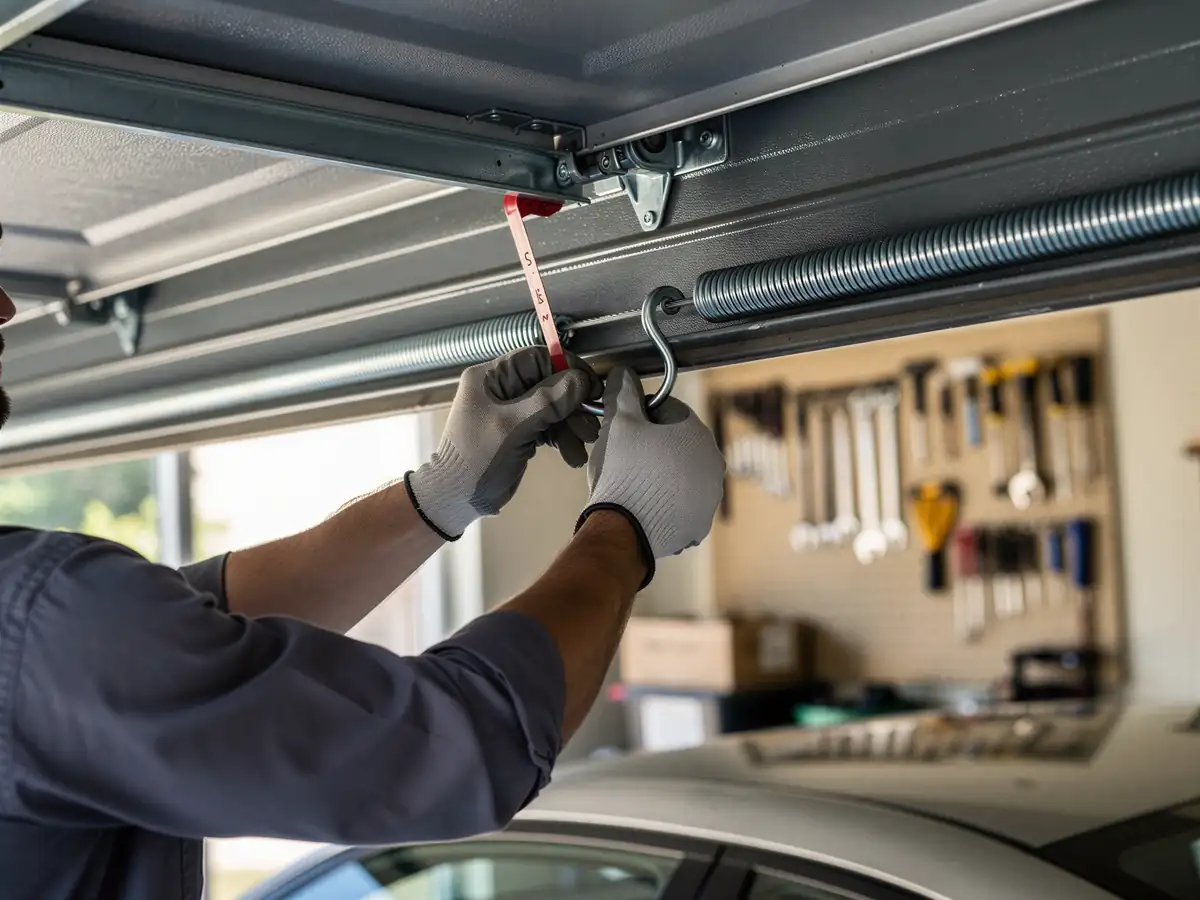
On a house from the early 90s, the giveaway is usually a single torsion spring mounted on a metal shaft directly above the door opening, often with light surface rust if it's never been painted or lubricated. If a coil has visibly separated from the rest, or the shaft looks twisted at an angle it shouldn't be, that's a spring on its way out rather than one that's already gone.
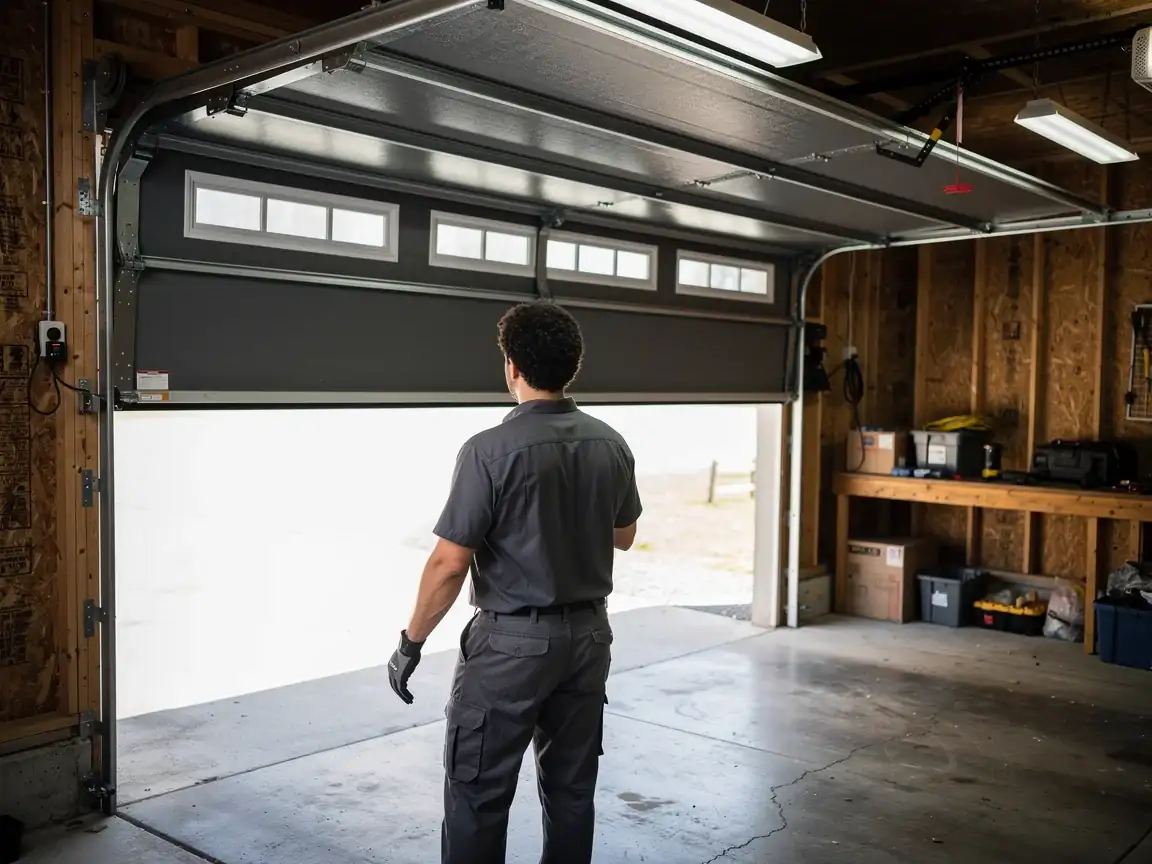
If the spring has already broken, the door will drop fast when the opener tries to lift it, or won't budge past a few inches, and you'll often find the two halves of the spring sitting slightly apart on the shaft - a clean separation, not a frayed break like a cable. The opener itself usually survives this fine since it's not built to fight a dead spring for long before it gives up and reverses.
Mild South Florida humidity doesn't do springs any favors over three decades, even without hard freezes to blame - it's steady wear more than weather extremes.
How Long It Takes
A standard torsion spring replacement on a single-spring setup, which is the common configuration for a 1991-era door, usually runs under two hours once the truck is on site. Extension spring jobs on a two-spring system can run a little longer since both sides typically get swapped together rather than one at a time, to keep the door balanced.
What adds time isn't the spring itself but matching it - spring sizing is based on wire gauge, coil diameter, and length, and the wrong one will either strain the opener or leave the door impossible to lift by hand if power ever goes out. We measure rather than guess, which costs a few extra minutes on site but means the door is actually balanced, not just moving.
What You Pay
We don't publish a flat number here because the spread between a single standard torsion spring and a heavier dual-spring job is wide enough that a single price would be misleading either way
What we can tell you is that the drive itself isn't the cost driver - it's the same trip whether the job is a $200 spring or a full two-spring replacement with new cables.
Get a firm number on the main spring repair page
Where pricing by job type is laid out, or call with your door's details and we'll quote before the truck leaves Homestead.