Why This Fails Locally
Start with the money, because it decides what we recommend when we're standing in front of your door. Median household income in The Hammocks runs about $83,253, a touch above the $82,726 median across Homestead Garage Door Pros' whole service area. At that income level, the math on a failing door almost always favors repair over replacement, provided the track and frame are sound - which they usually are here.
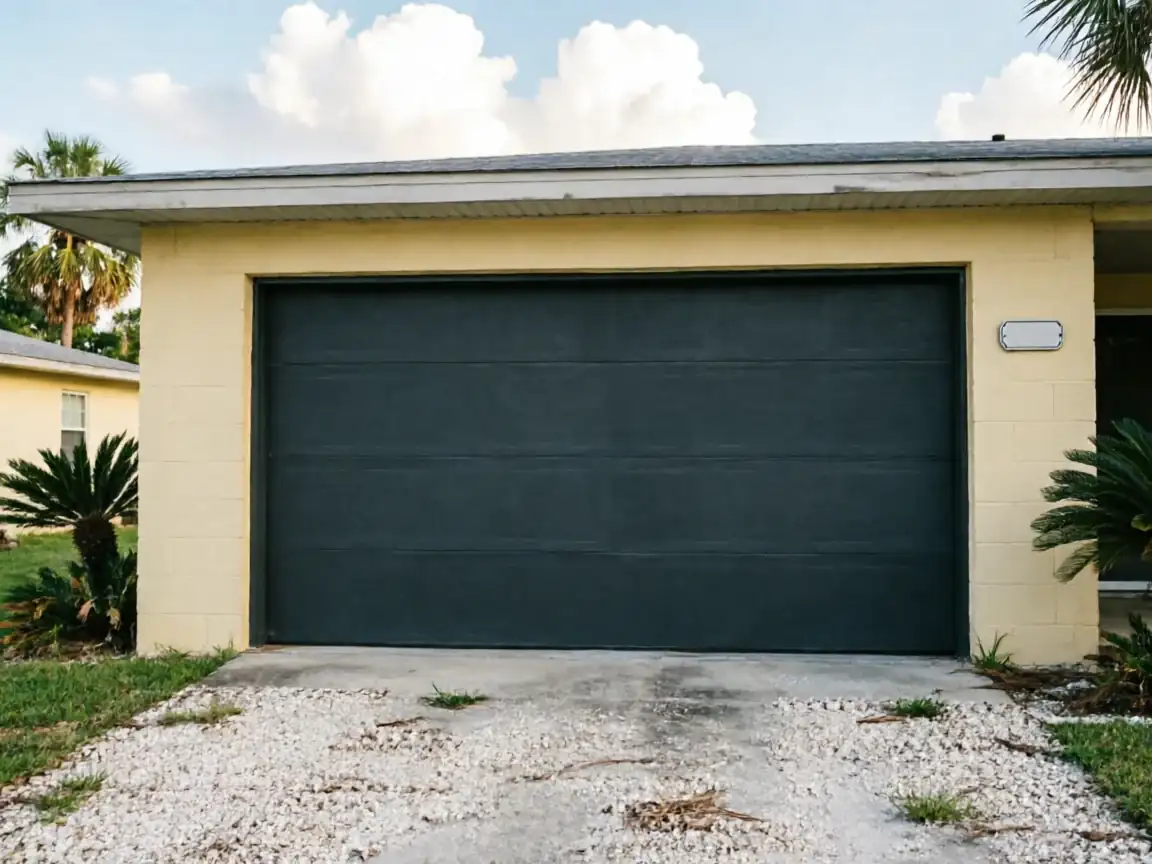
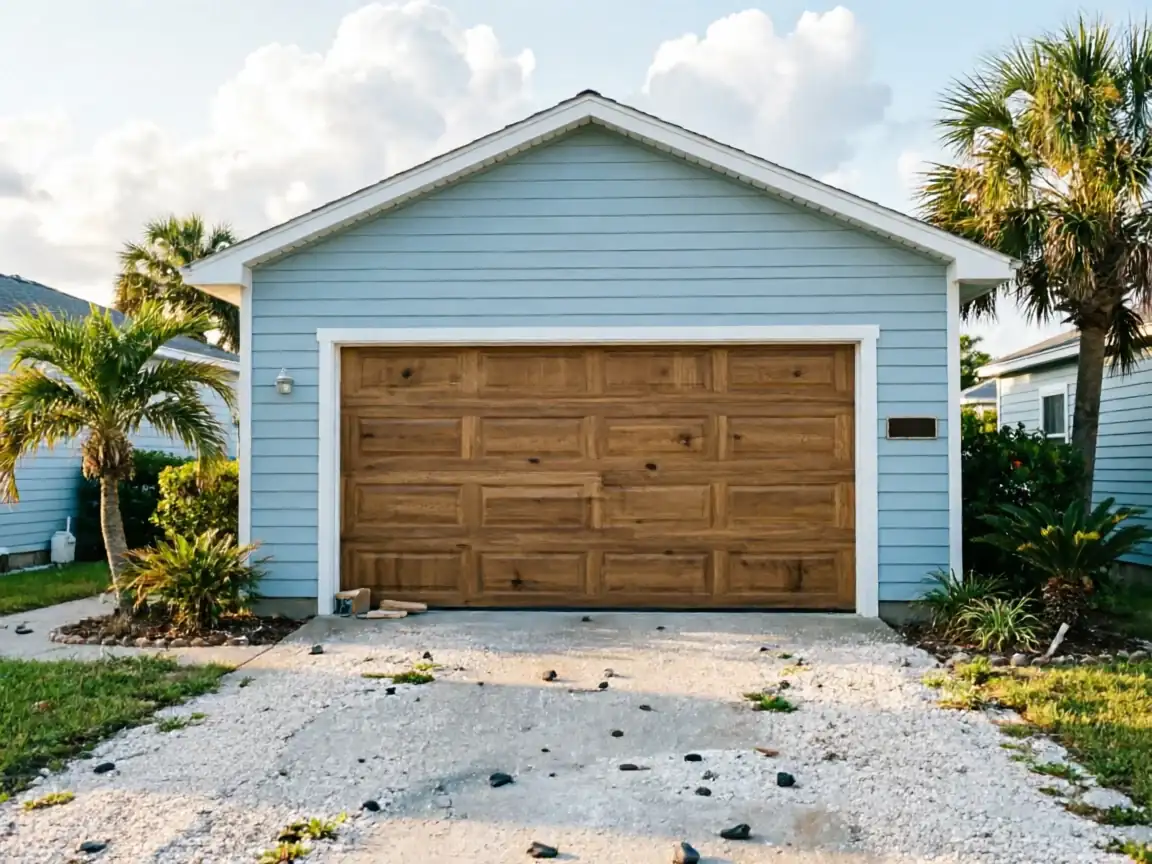
That's because the housing is young for this part of the county. The median build year in The Hammocks is 1991, where most of the 28 communities we cover - the older pockets closer to Homestead - carry a median closer to 1979, mostly 1960s and 70s construction. Thirty-year gap doesn't sound like much until you look at what it means for hardware: this area got factory torsion-spring systems and steel sectional doors from the start, not the older extension-spring setups bolted onto one-piece doors that we still find on the older side of the territory.
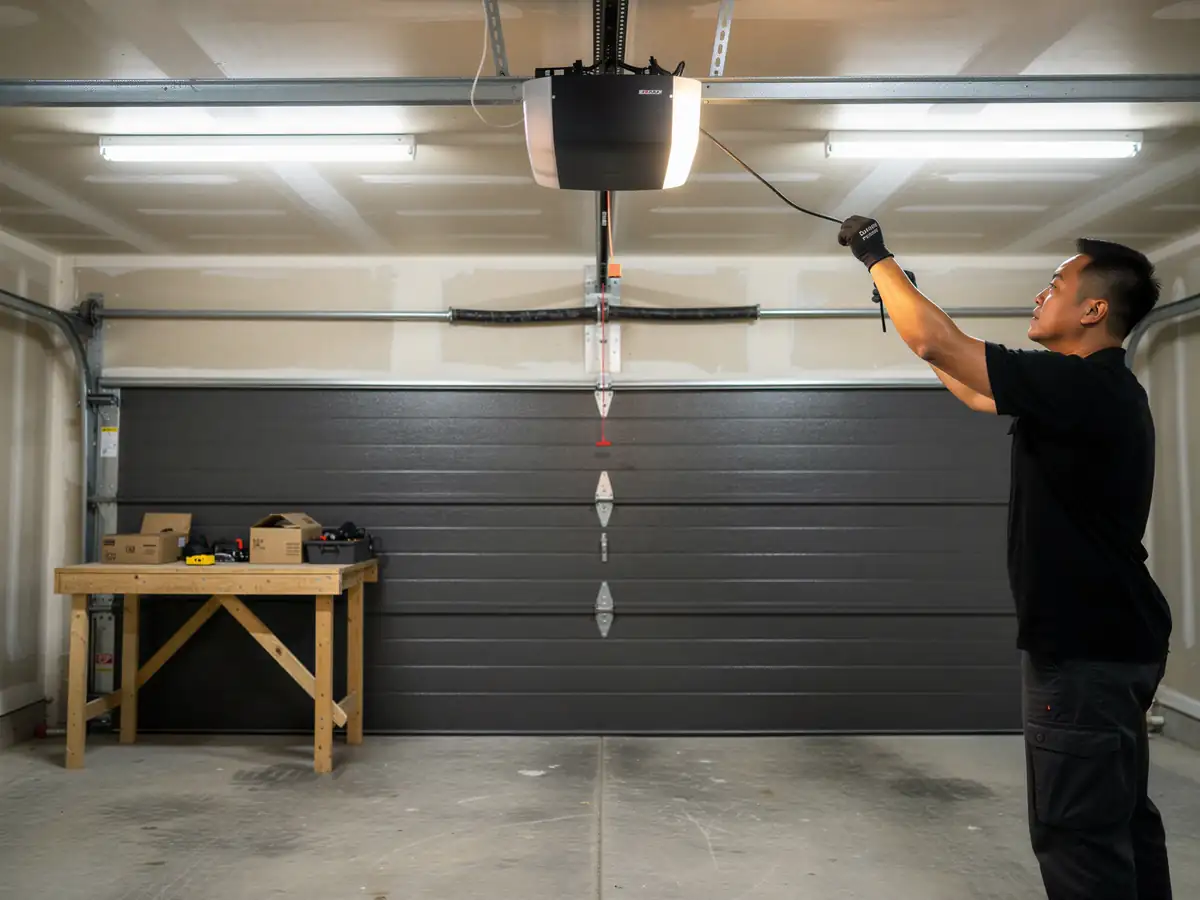
So the common failure in The Hammocks isn't a seized torsion spring from decades of neglect. It's wear on parts built into a door system from the 90s or 2000s - the opener logic board, the photo-eye brackets, the nylon rollers that were standard then and are due for swapping now.
Booking a Visit
We run out of Homestead, and The Hammocks sits about 14 miles out - farther than the closer stops on our route like Leisure City or Florida City, each about 2 miles from the shop. We don't keep a branch or a drop point in The Hammocks, so a visit here gets scheduled as a trip, not a drop-in. That's not a knock against the area; it's just the honest layout of how the territory is covered.
When you call, tell us the age of the door if you know it and whether the opener is original to the house. For a neighborhood built mostly after 1991, that's usually enough for us to guess the hardware before the truck leaves the yard, which saves a second trip for the right part.
We book maintenance visits the same way we book repairs - by appointment, not on-demand same-day service. If your opener is dead and the car's trapped inside, say so when you call; we'll work it into the schedule as close to the front as we can, but we don't promise a response window we haven't earned.
The DIY Question
There's real DIY room on a door built in the 90s or 2000s
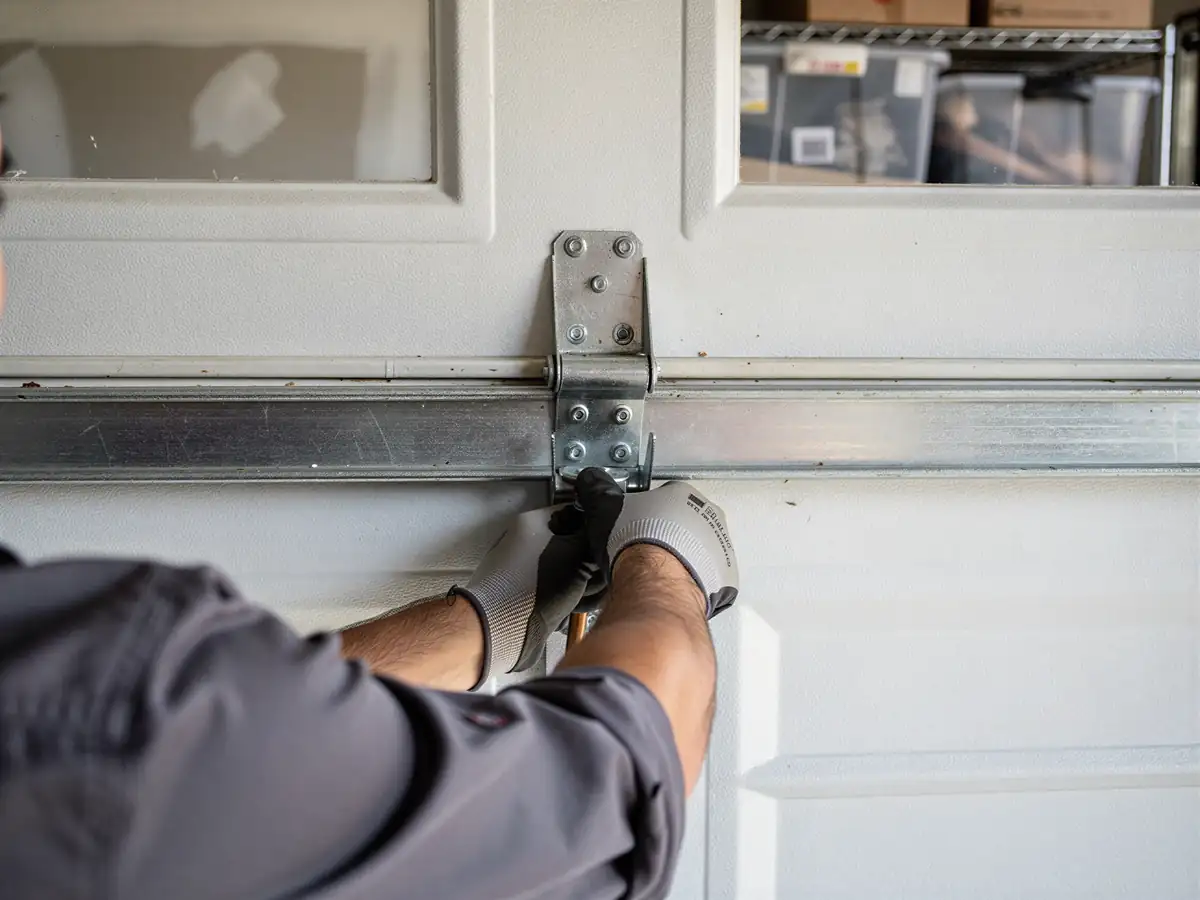
Lubricating rollers and hinges, tightening loose bolts on the track brackets, replacing worn weatherstrip along the bottom panel, cleaning and realigning photo-eye sensors that have drifted out of true. None of that needs a torsion bar wrench.
What doesn't belong in a homeowner's hands is anything touching the spring under tension, torsion or extension, and anything involving the cable drums
That's true everywhere, not just here, but it's worth saying plainly: a torsion spring holds enough stored energy to break a wrist or worse, and the tools to wind one safely aren't something most garages have lying around.
Our honest limitation
If your opener logic board itself has failed - not the sensors, not the wiring, the board - we often can't get a same-day replacement part for every make. Lead times on some control boards run longer than the visit itself, and we'll tell you that up front rather than have you wait around for a part that isn't coming that day.
What You Are Seeing
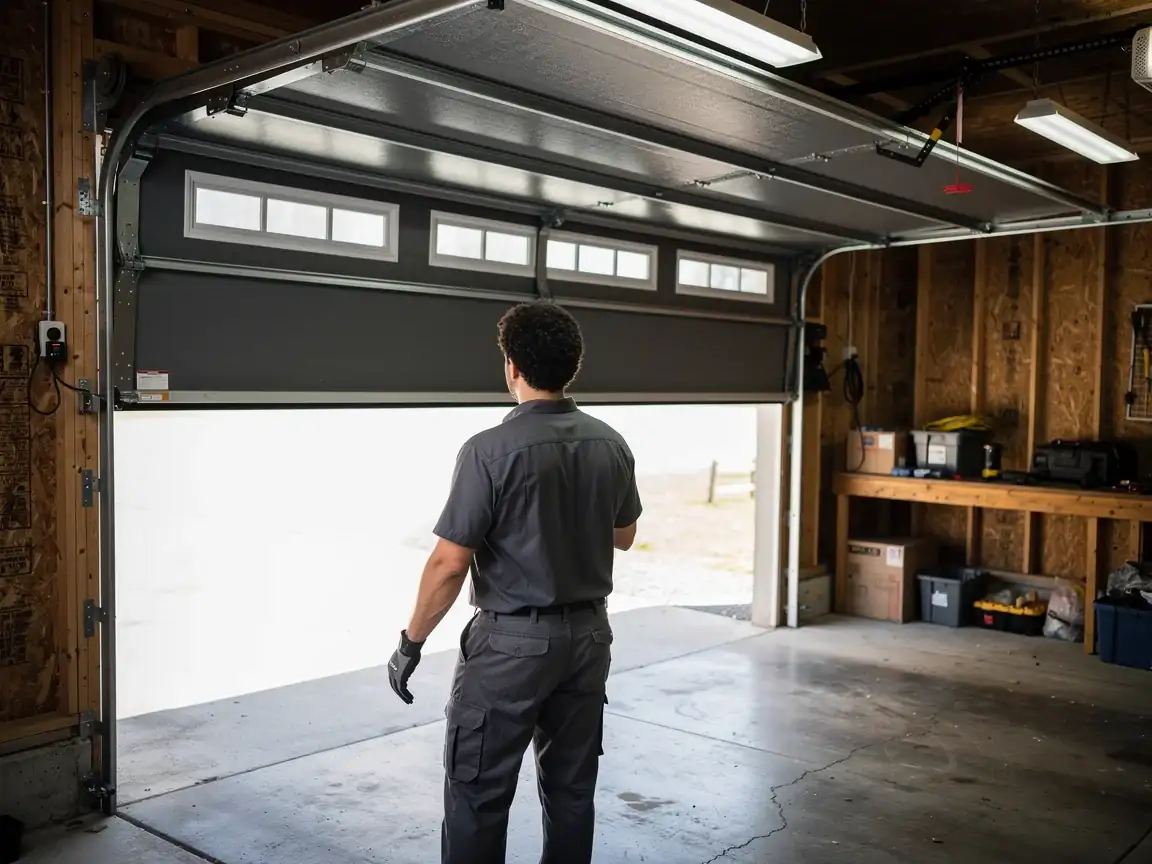
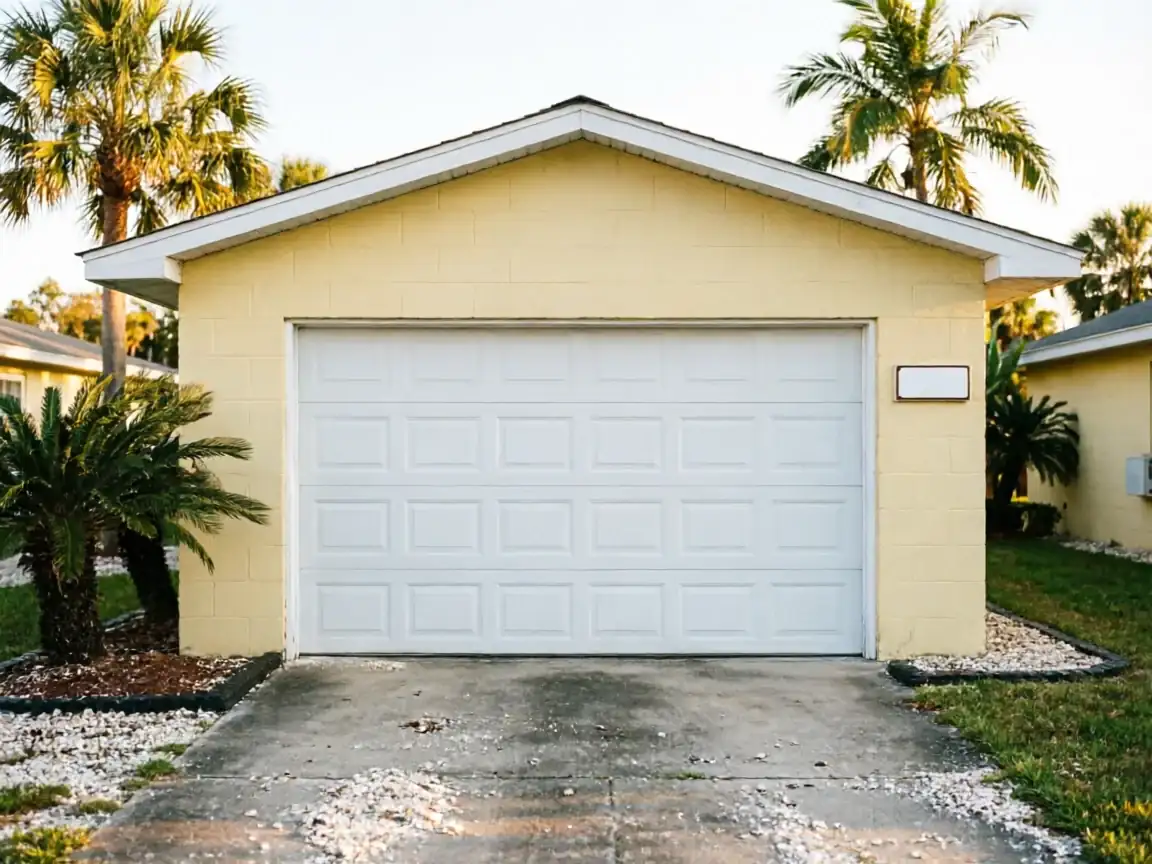
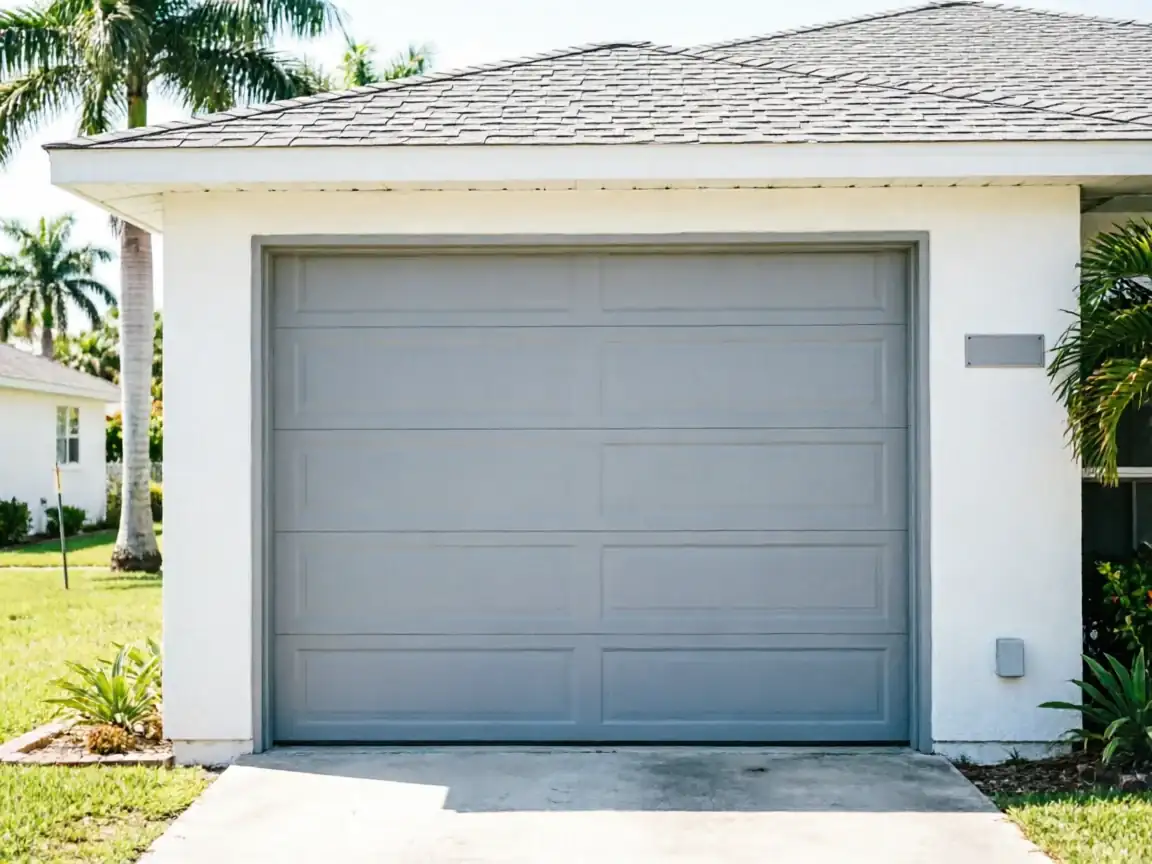
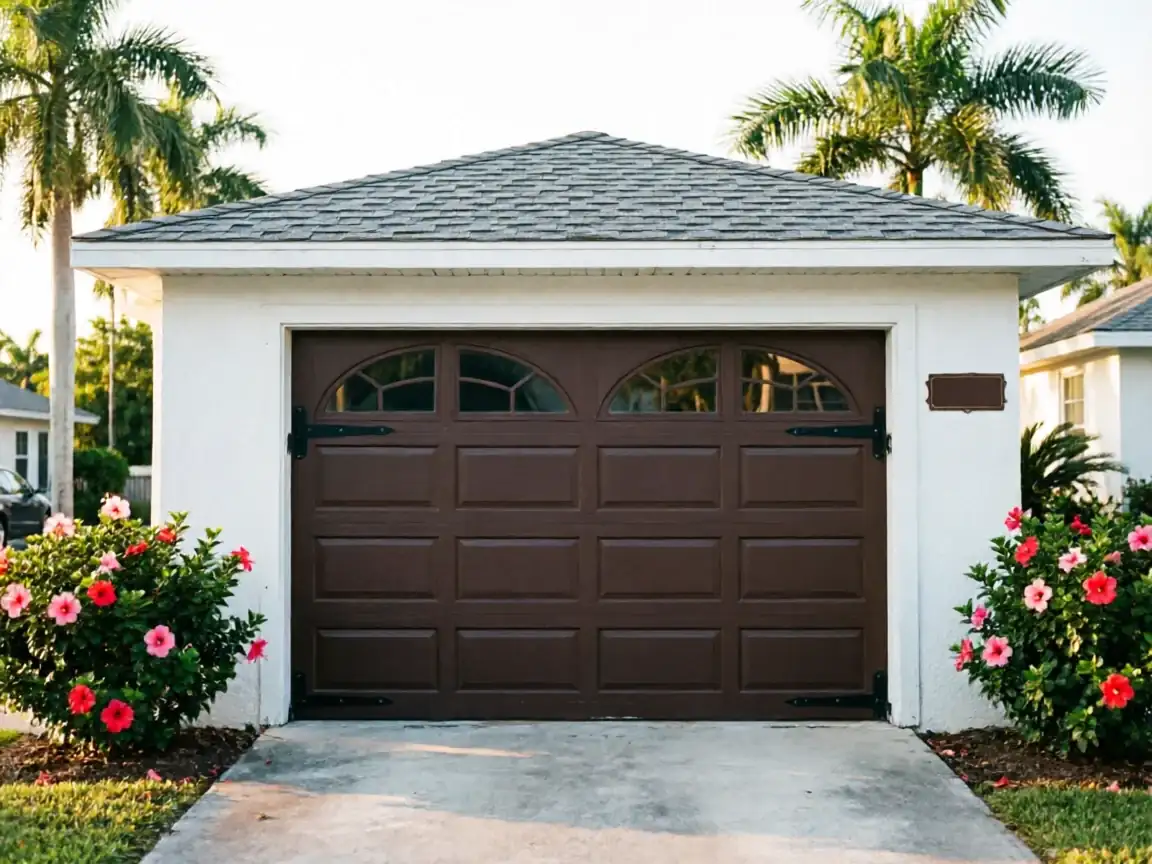
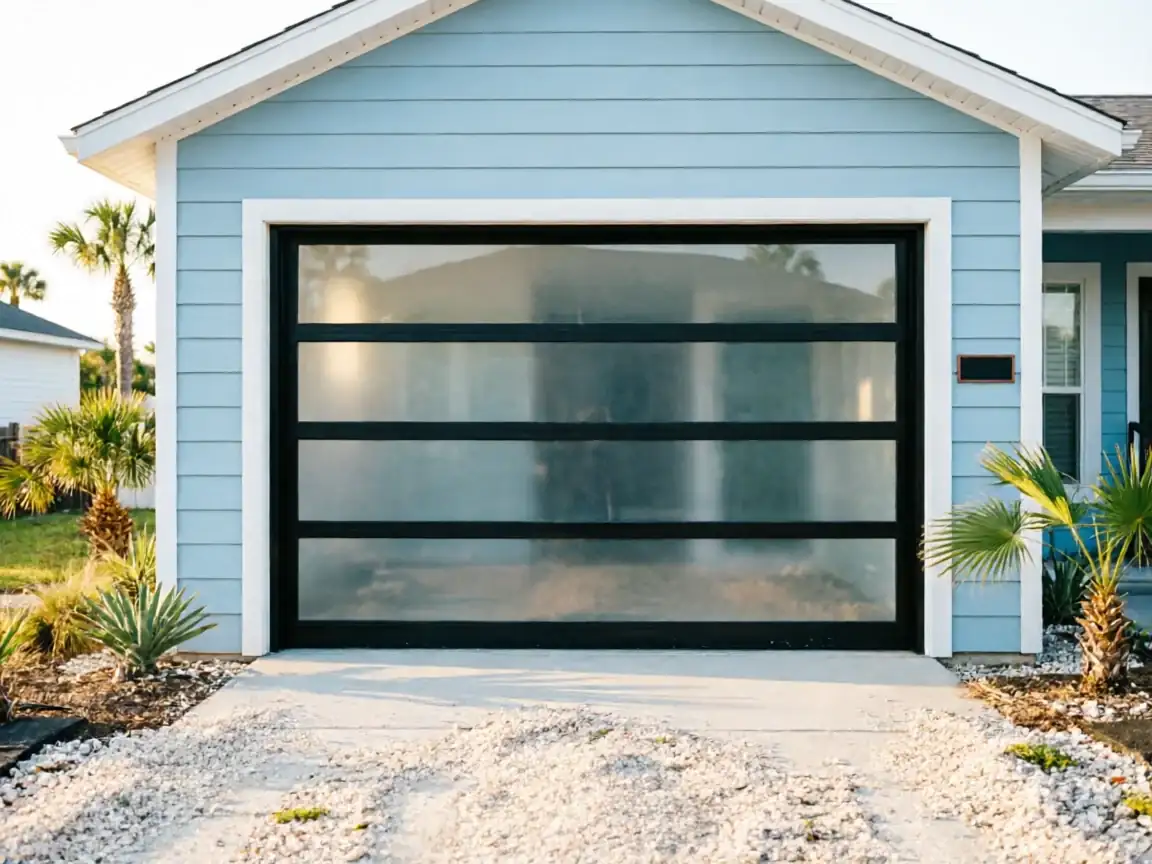
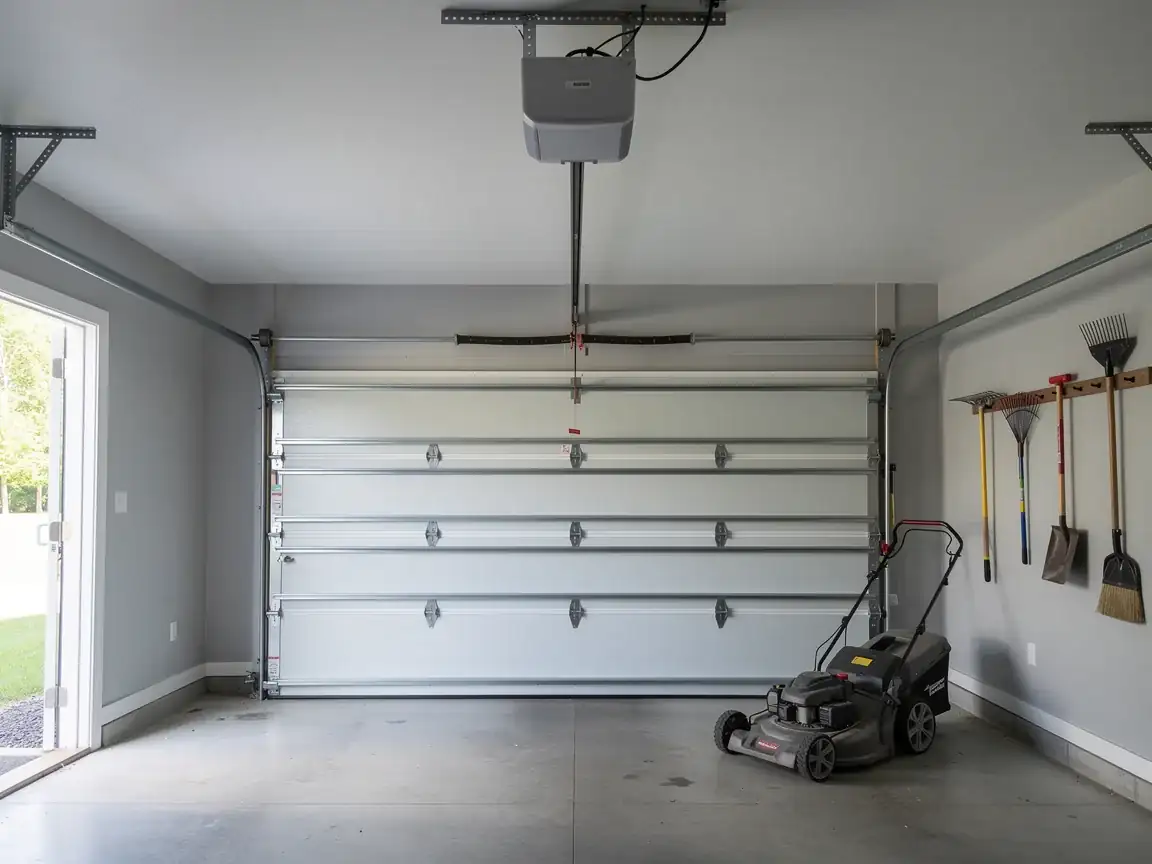
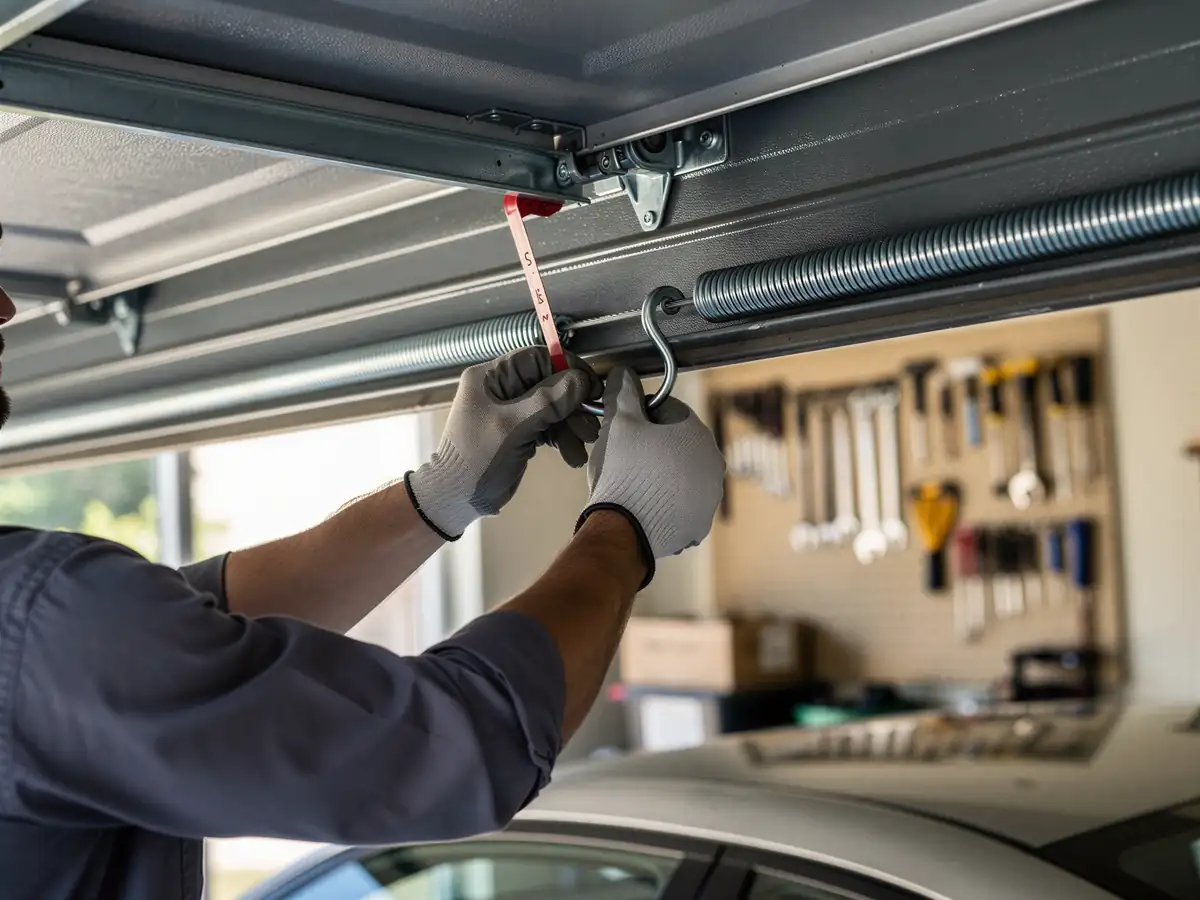
In a house built around 1991, the door itself is usually steel sectional, not the older wood or single-panel style you'd find on 1960s stock elsewhere in the service area. The springs are torsion, mounted on a bar above the door rather than stretched along the tracks. That's a more durable setup, and it shows - most of what fails here is the opener, not the door.
The mild temperate climate across this whole region means less of the spring fatigue you'd get from big seasonal temperature swings. What ages these systems instead is just use: chain-drive openers from the 90s and early 2000s grinding down, photo-eye brackets getting bumped out of alignment by a stray bike or a parked bin, and nylon rollers wearing flat after years of the same door cycling twice a day.
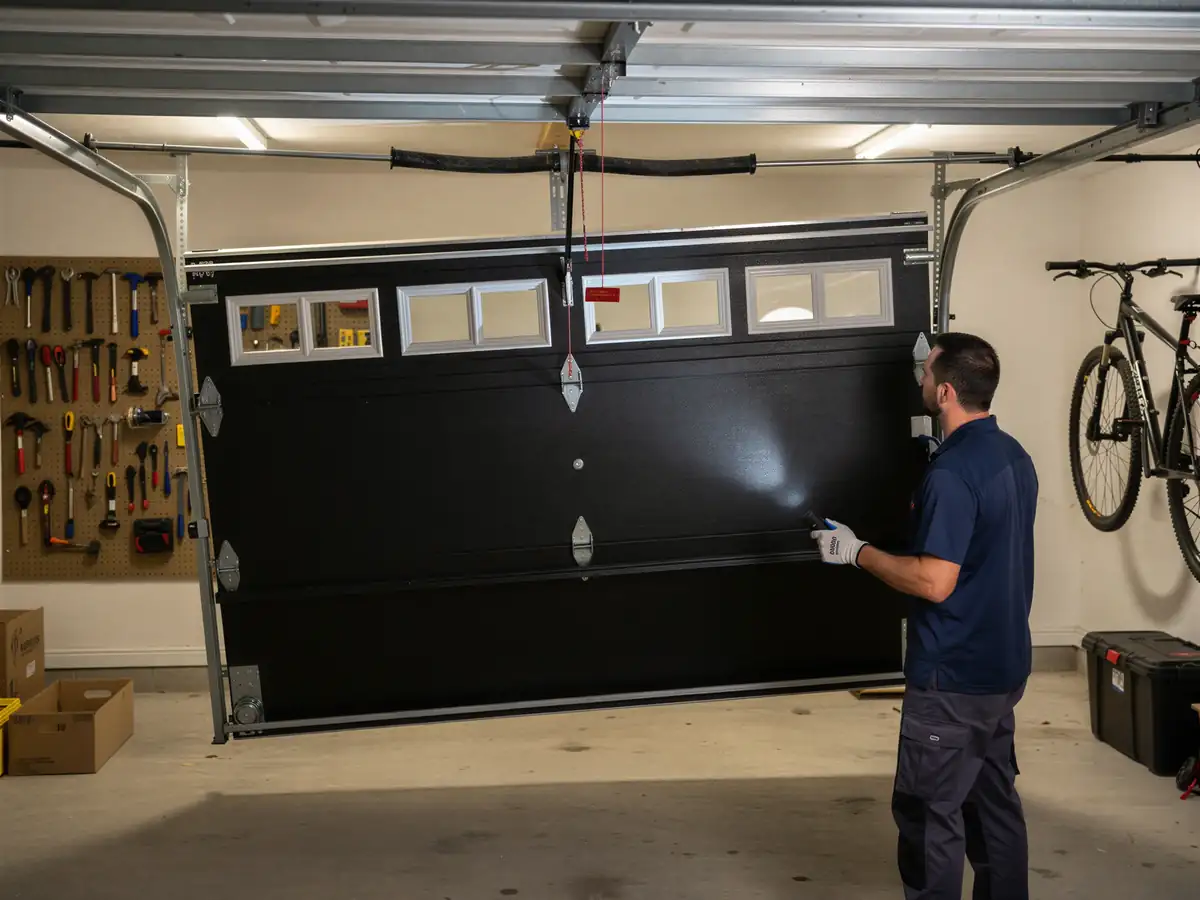
If you're hearing a grinding or slapping noise on the way up, that's almost always a roller, not a spring. If the door reverses on its own before it touches the floor, check the photo-eyes first - that's the most common call we get from this part of the territory.
How Long It Takes
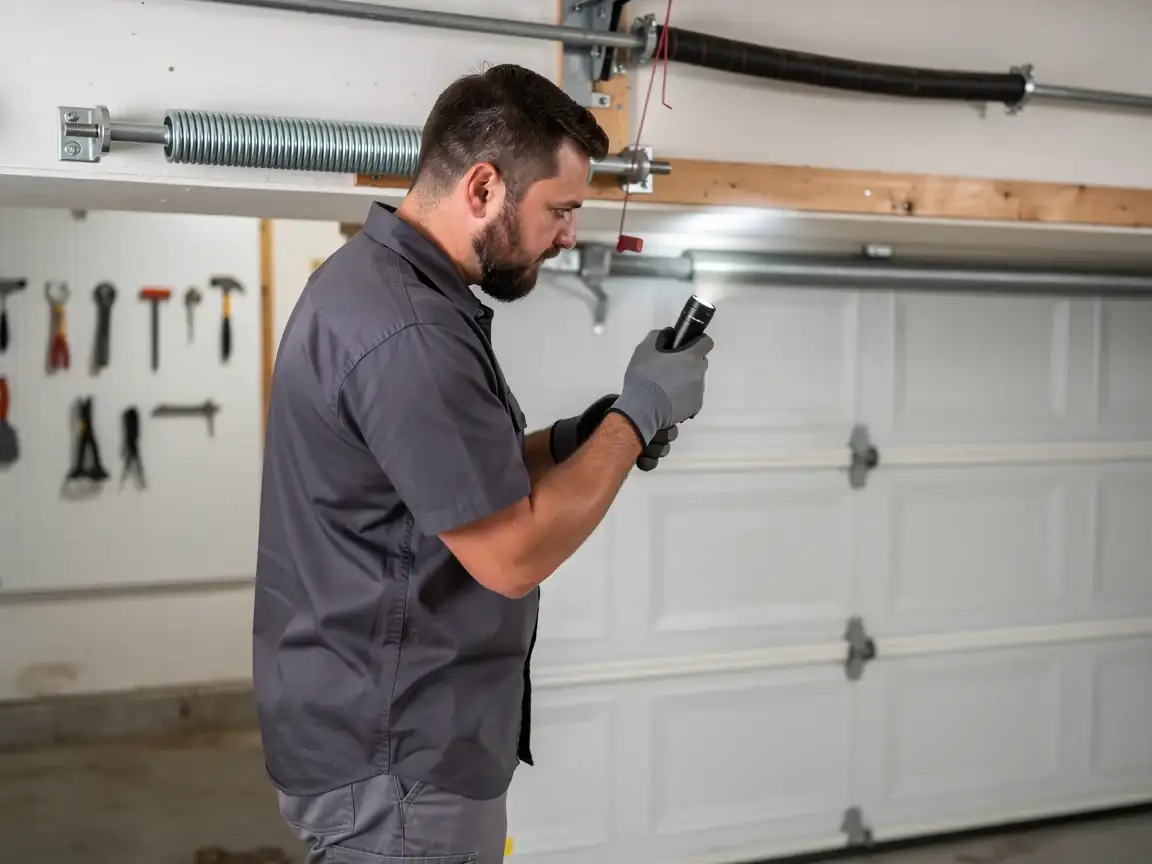
A standard maintenance visit - lubrication, hardware check, roller and cable inspection, photo-eye alignment, opener test cycle - runs about the same length of time whether the house is in The Hammocks or anywhere else on the route. What changes here is drive time, not wrench time: at 14 miles from Homestead, more of the appointment window is windshield than most of the closer stops like Naranja or Homestead Base.
If the visit turns up something beyond routine upkeep - a cracked panel, a dying opener board - we'll tell you on the spot whether it's a same-visit fix or a second trip for a part. Given the age of the housing stock here, openers nearing 20-plus years old are the most likely thing to need a return visit, simply because board replacements aren't always a truck-stock item.
We don't pad the visit to look thorough, and we don't rush it to get to the next stop. It takes what the door needs.
What You Pay
We don't quote a flat number here because no two doors need exactly the same work
But the income context matters for how we frame the recommendation. With a median household income of $83,253 in The Hammocks, most repairs - roller replacement, photo-eye realignment, weatherstrip, even an opener board swap - land well inside what makes sense to fix rather than replace, especially on a door that's structurally sound.
- $83,253 median household income
Full replacement only enters the conversation when the frame or track has warped
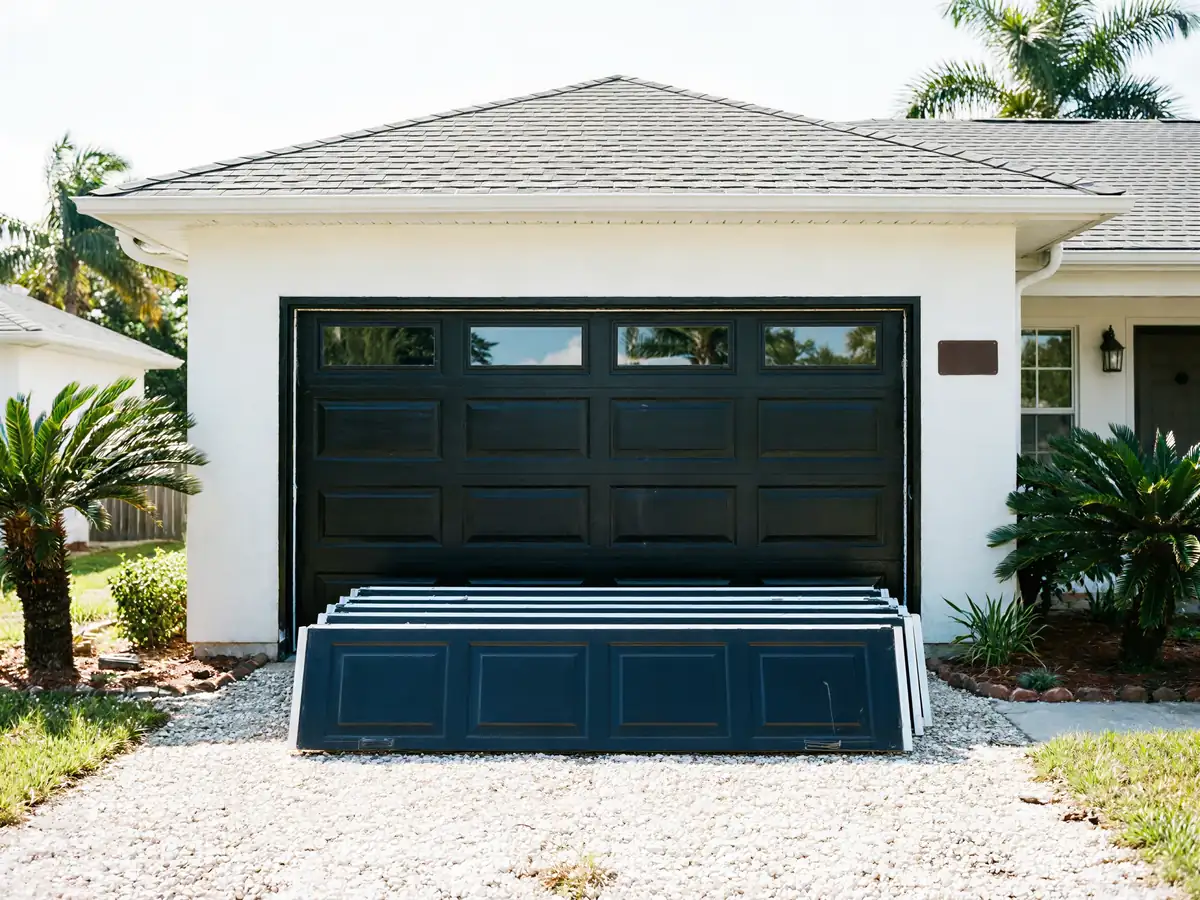
Which is rare on housing stock this age, or when an opener is old enough that parts for it simply aren't made anymore. We'll say so plainly if we see it; we don't sell a new door onto a homeowner when a $40 part would have solved it.
The honest answer on cost is that it depends on what's actually worn versus what's just original and still working fine
And that's exactly what the visit is for.