What Changes With the Season
Homestead sits in a mild temperate band, so you don't get the freeze-thaw cycle that snaps springs or warps tracks the way it does up north. That's the good news. The less good news is that a mild climate doesn't mean no climate stress at all - humidity and steady warmth work on metal and lubricant differently than cold does. Grease that would stay put in a dry, cold garage up north can migrate or thin out here over a long stretch of consistent heat, leaving rollers and hinges running dry well before a homeowner expects it.
Because temperature swings here are narrow, a lot of the noise people hear isn't a seasonal spike - it's a slow year-round drift that finally crosses the line into audible. If your door has gotten louder gradually rather than overnight, that pattern fits a mild, steady climate more than it fits a storm or a cold snap. There isn't a single month in Homestead where you can expect a sudden noise season the way other regions do. The noise shows up whenever the wear finally catches up, not on a calendar.
The Problem
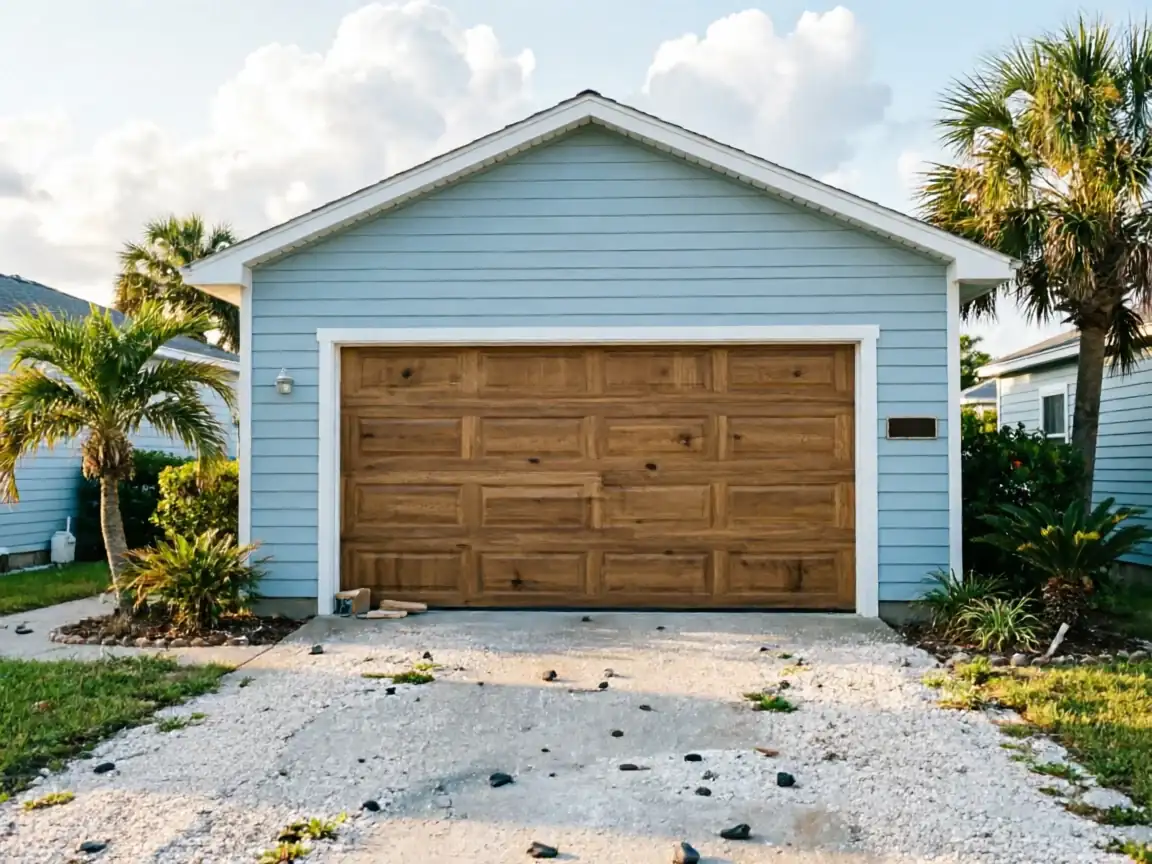
A lot of houses in and around Homestead went up between 1957 and 2008, with the median build year landing around 1979. That means a large share of doors and openers in this area are original or close to it, running hardware designs from the 1960s and 70s across the 28 named neighborhoods in this service area. Original hinges, rollers, and spring hardware from that era weren't built with today's nylon rollers or sealed bearings, so metal-on-metal contact is common, and it gets louder as the parts wear.
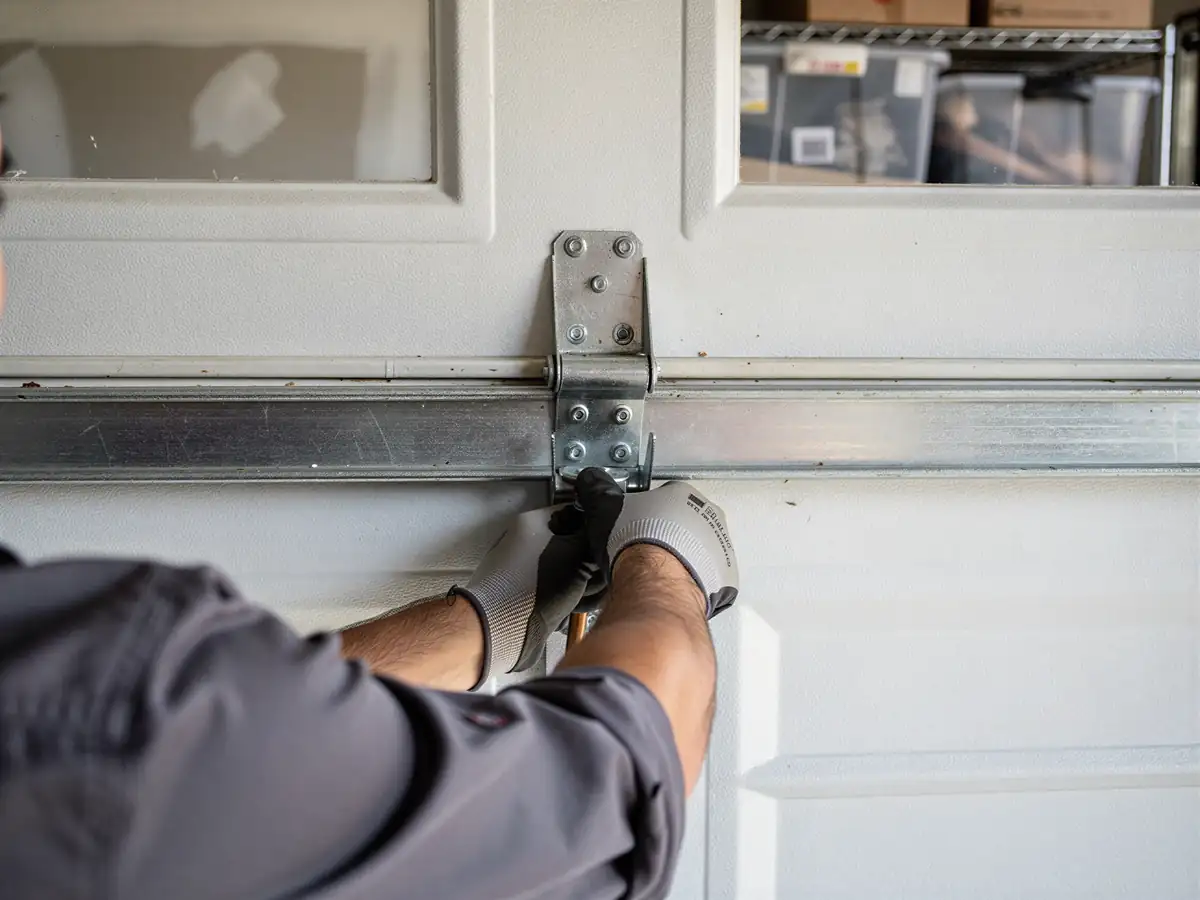
A grinding or rattling door in a house from that build window is usually original steel rollers in a worn track, or a hinge pin that's never been replaced since the house was framed. That's a different repair than what you'd do on a door installed in the last ten years, where the hardware is newer and the noise usually points to something else - a loose fastener, an opener gear, or a spring starting to go. Knowing roughly when a house in this area was built tells you a lot about what's likely inside the garage before anyone even opens the door.
Where People Go Wrong
The most common mistake is spraying any lubricant on everything and calling it fixed
On a door running 1960s or 70s-era steel rollers, a quick spray can quiet things down for a week and then come back louder, because the real wear is in the roller stem or the track itself, not just dry metal. People also assume a noise that started suddenly means a big repair, when on original hardware from a house this age it's often just a loose roller bracket that's been rattling for months and finally worked itself free.
The other common error is ignoring a noise because the door still opens and closes fine
On hardware this old, a noise is usually the only warning you get before a part fails outright - a cable, a hinge, a roller stem. We can't tell you over the phone which one it is just from a description; that's an in-person call, not a guess. If your door is still under original 1960s-70s hardware and it's making a new sound, that's worth a look before it's worth ignoring.
How Local Conditions Play In
With a mild, steady climate across this area, the wear on garage door hardware tends to be gradual rather than triggered by one hard freeze or one heat wave. That matters for diagnosis: a sudden loud noise in a mild climate is less likely to be weather-related and more likely to be a part that's simply reached the end of its life after years of steady, unremarkable use. Houses built across the 1957-2008 range, with most clustered around the late 1970s, have had decades of that slow, even wear working on the same original springs, hinges, and rollers.
Across the named communities in this service area, from Leisure City and Florida City a couple of miles out to Naranja and Homestead Base a few miles further, the housing stock follows the same general era and the same climate pattern. That consistency is actually useful: it means the noise complaints we hear tend to repeat across the same handful of causes tied to hardware age, not to one-off weather events. We don't guess at which part based on the sound alone - we look at the door.