The DIY Question
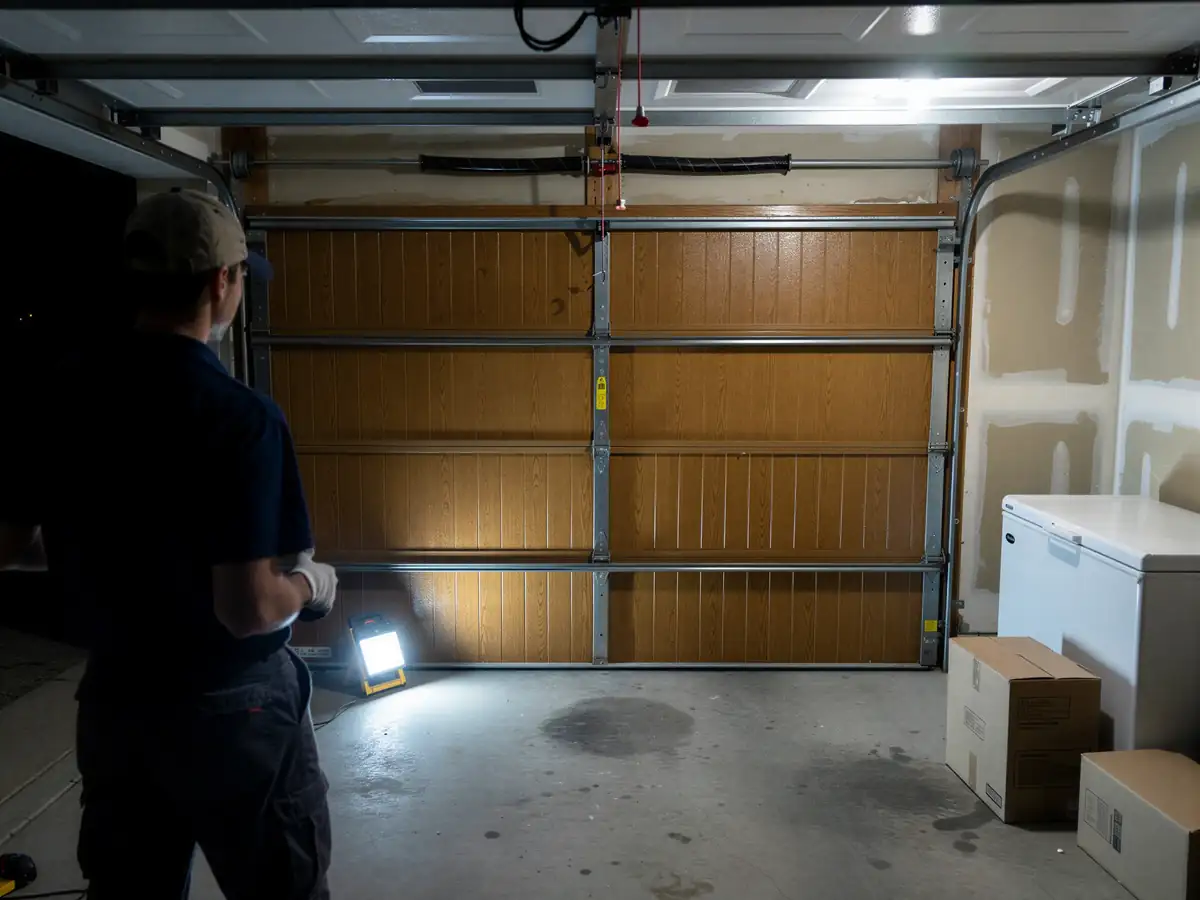
You can grease a hinge and tighten a loose bolt yourself, and you should. Wipe down the tracks, check that the photo-eye sensors aren't coated in dust, and listen for grinding when the door runs. That much takes ten minutes and a rag.
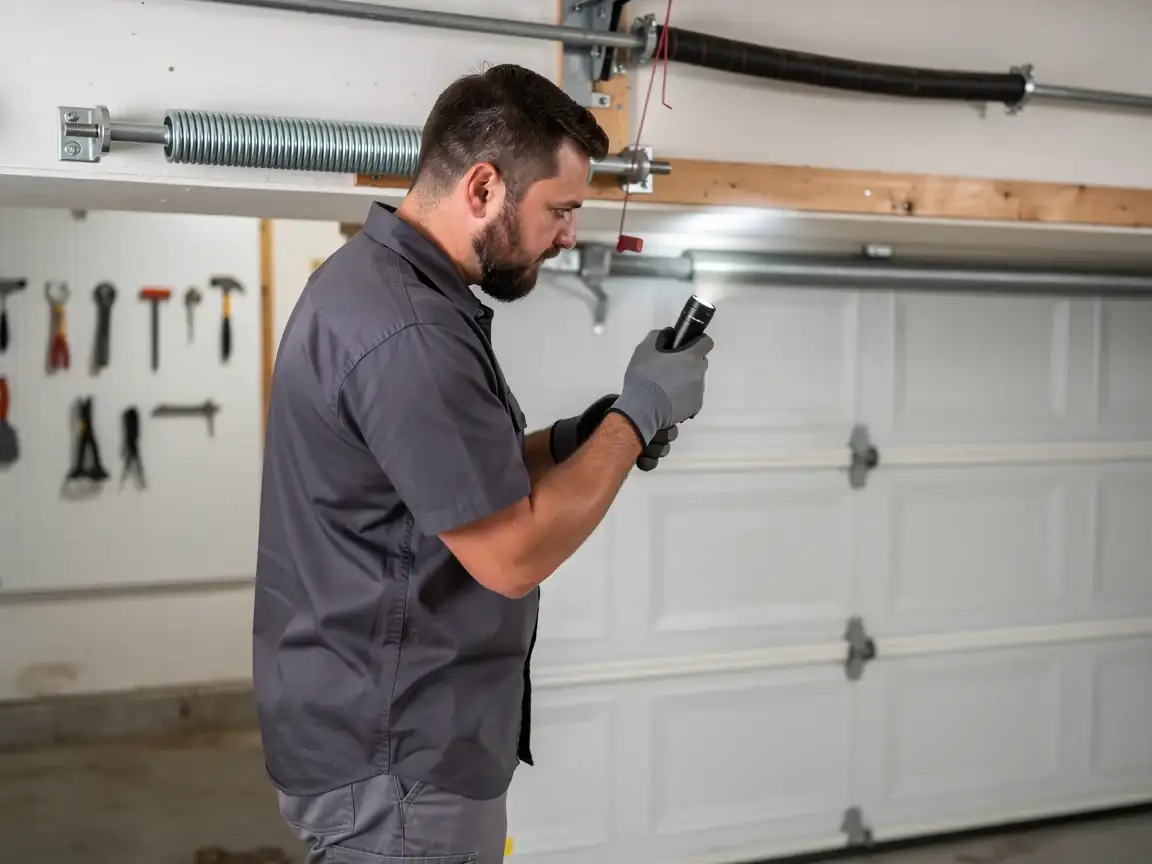
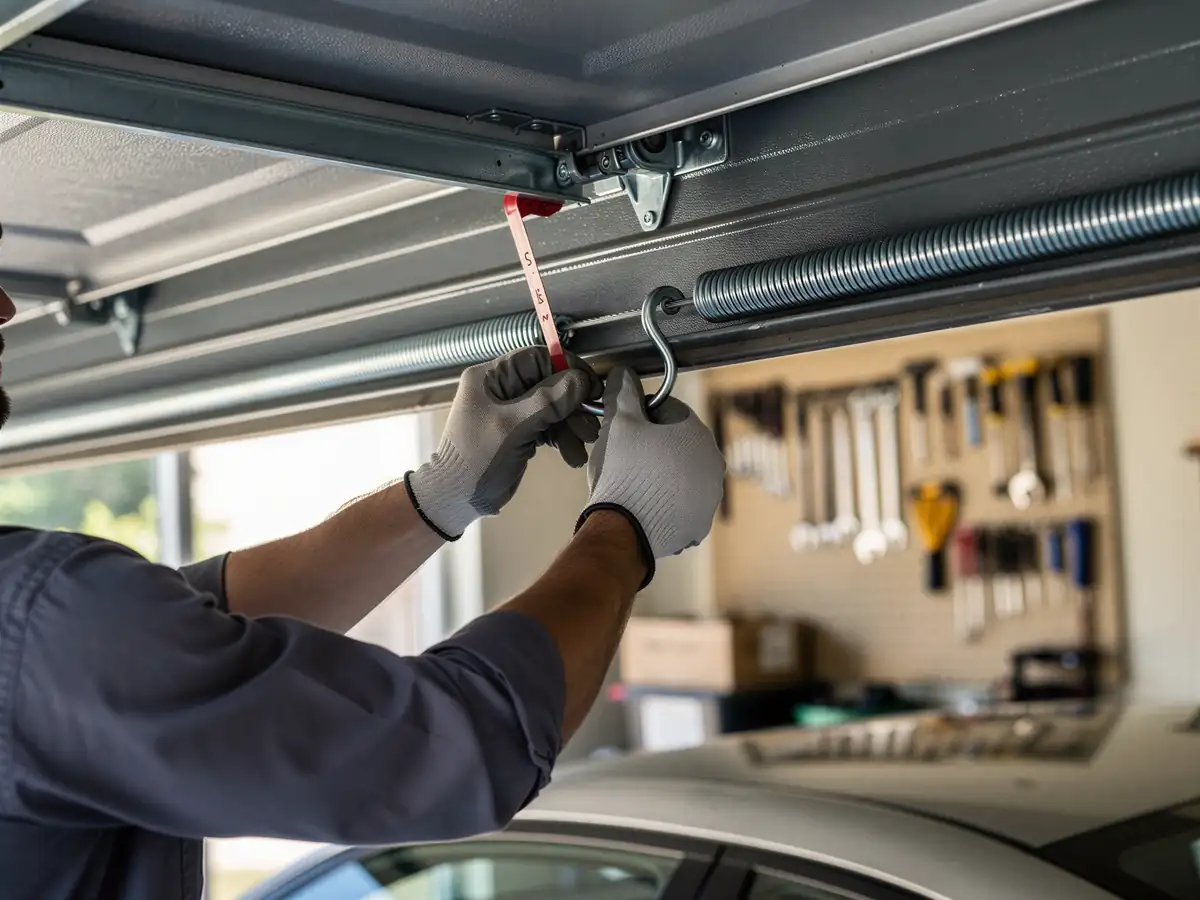
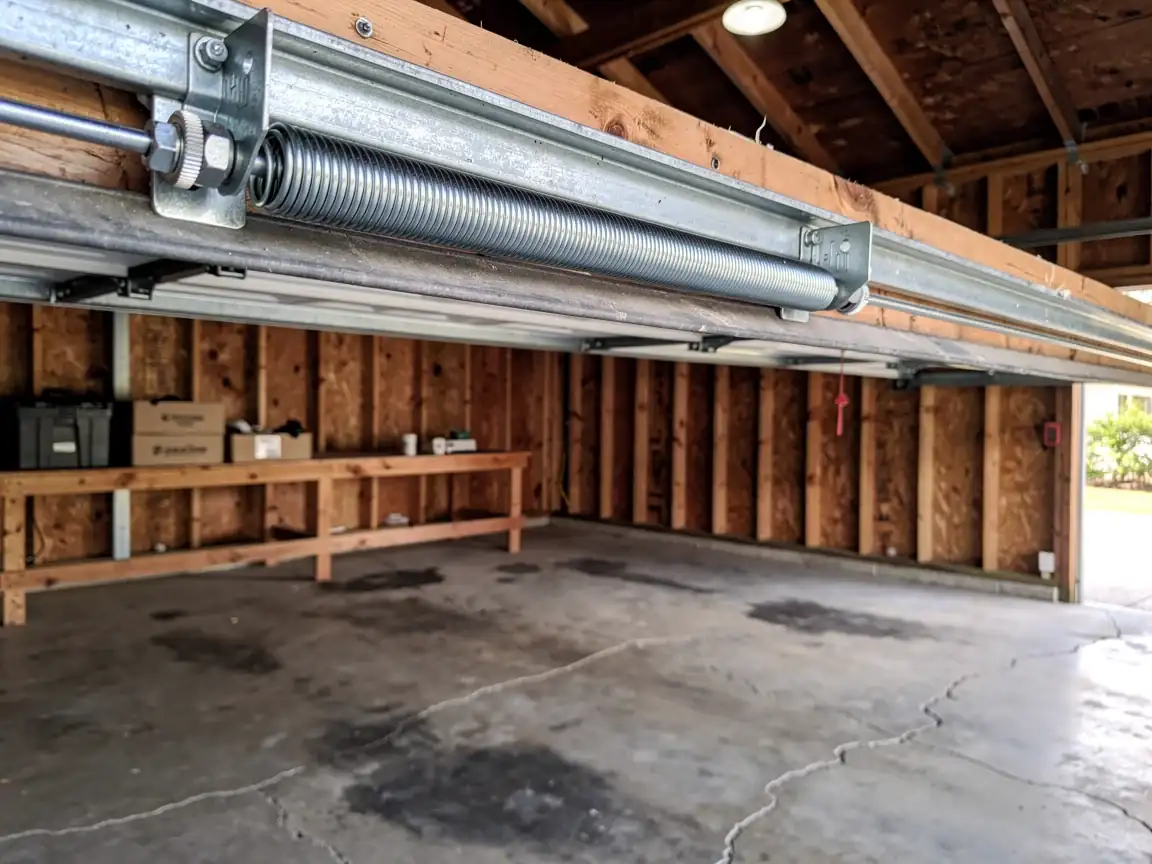
What you shouldn't touch is the torsion spring, and on a lot of the doors still in service across this area, that spring is original equipment. Homes here were built anywhere from 1957 through 2008, with the typical house dating to around 1979, and a spring that old has given decades of cycles. Winding or unwinding one under tension without the right bars is how people lose fingers, not an exaggeration from a sales page.
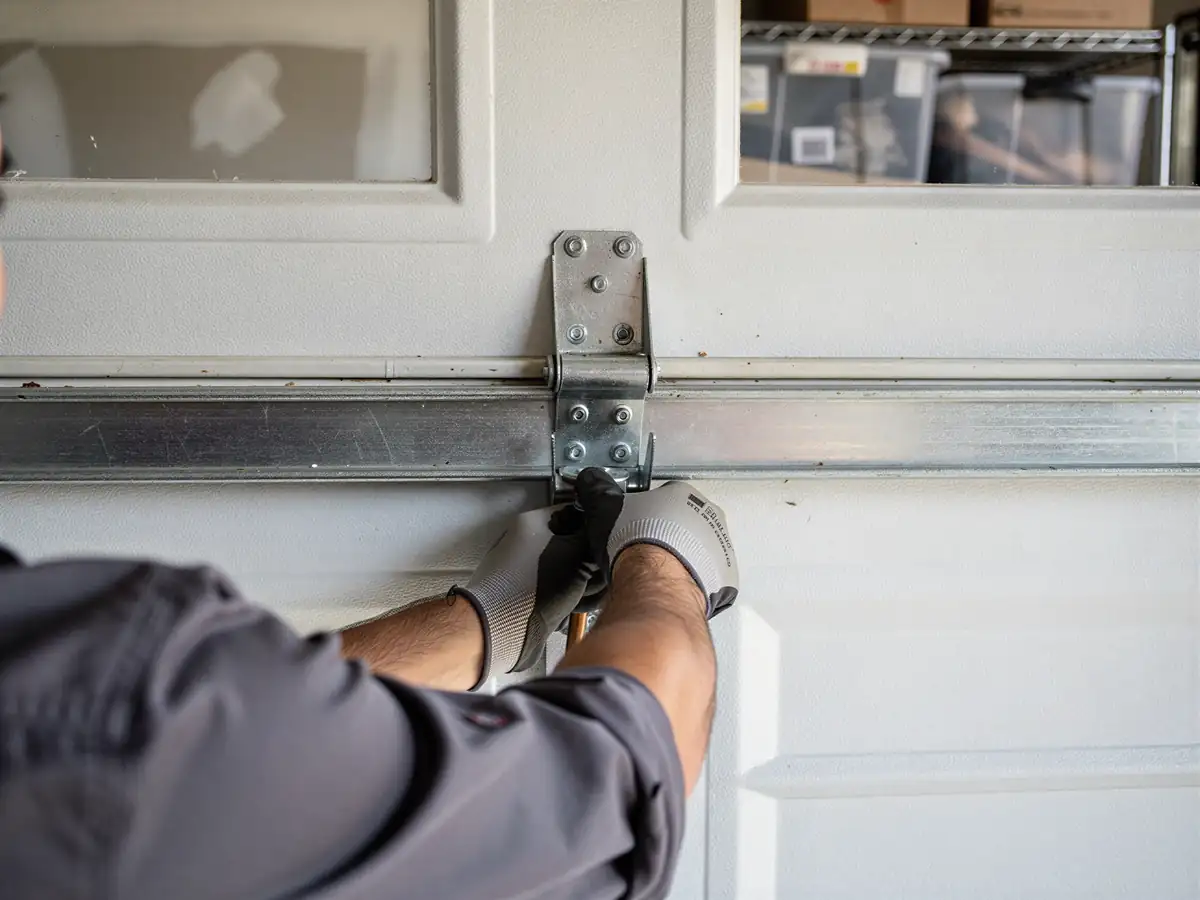
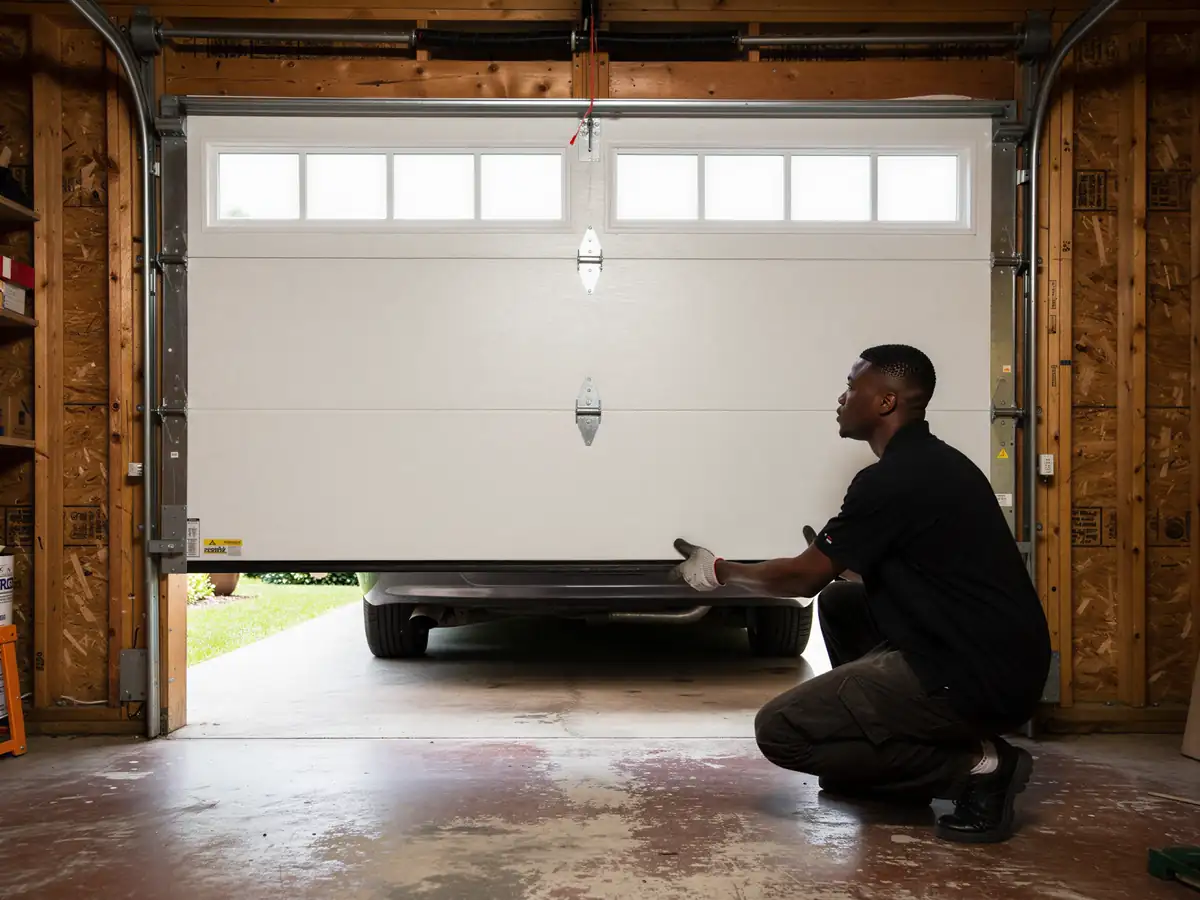
Same goes for the cable drums and the bottom brackets - if a cable is frayed, call someone, don't try to finish the job with pliers. The honest limit here: if your opener is more than fifteen years old and the logic board is failing, we don't stock parts for every discontinued model, and replacement is usually the faster, cheaper path than hunting down an obsolete board.
What You Are Seeing
The complaints we hear on service calls here are consistent: a door that reverses halfway up, a motor that hums but doesn't lift, rollers that have worn into oval shapes instead of round, and rust bleeding through the bottom panel seams. None of that is random.
Much of the stock in this area is 1960s and 70s construction, and those doors were built with steel gauges and hardware standards that don't match what ships today. Galvanized rollers and springs from that era weren't coated for constant humidity exposure, and forty-plus years in it shows as surface rust on the torsion bar and pitting on the drum.
On newer builds, closer to the 2000s end of that 1957-2008 range, the failures look different - it's usually the opener logic board or the limit switch going out of calibration rather than the hardware itself. Either way, what you're seeing is wear that's been building for years, not a sudden one-time event.
Why This Fails Locally
This region sits in a mild temperate band
Which sounds like good news for a garage door and mostly is - no hard freeze-thaw cycle cracking the slab or seizing a track overnight. But mild and humid year-round is its own kind of hard on steel. Moisture sits in the air most months instead of drying out in a cold snap, and that steady dampness is what drives the rust we see on original torsion springs and drum hardware from the 1960s and 70s housing stock.
A door in a drier, colder climate with the same age spring might just get stiff
Here, the spring coil corrodes unevenly, which means it can fail asymmetrically - one end going before the other - and that uneven failure is what throws a door off its tracks instead of just refusing to open. It's also why we see more roller and bracket corrosion on doors facing the side that gets the least sun, since that side dries out slower after humid stretches.
Maintenance here isn't about preventing a single disaster
It's about catching corrosion and wear before the asymmetry sets in.
Booking a Visit
A maintenance visit covers the torsion spring and cable condition, roller and track wear, opener calibration, and the weatherstrip seal - the parts that actually fail given the age and humidity exposure typical of homes built in this 1957-2008 window. We'll tell you plainly if something's holding up fine and doesn't need touching; we're not going to sell a spring swap on a door that's got years left in it.
Households across this service area range widely in income, with a median around $82,726, and we price maintenance visits the same regardless of neighborhood - the job is the job. If you've got a specific noise or symptom, mention it when you call so the right parts are on the truck.
Reach out through the contact page to get a visit scheduled.